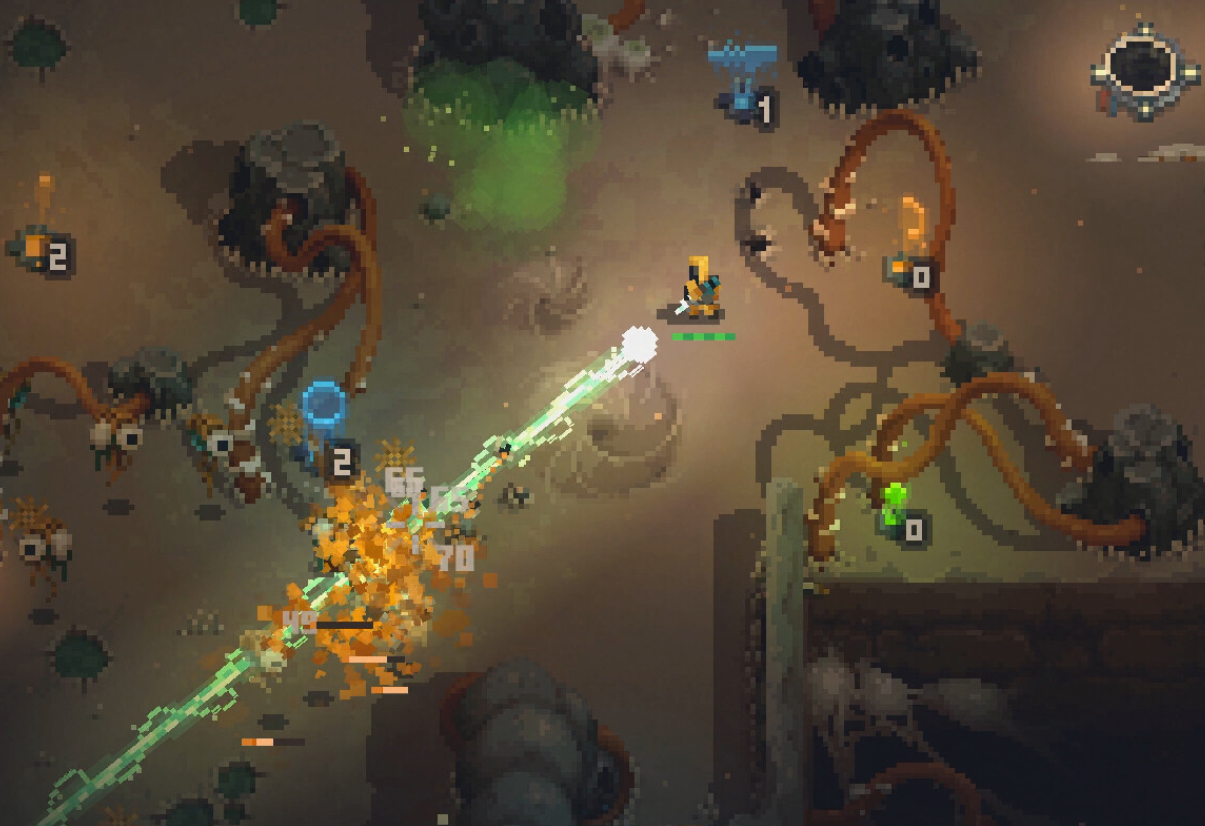
The bullet heaven genre has taken over all walks of life. I’m not complaining, though; I love a good game like Vampire Survivors, and I’m enjoying the continued evolution of the genre, which this time has taken over the skies in a new game called Cloudbreaker.
Developed by Ballast Games, this action-roguelite takes the formula established in Vampire Survivors and then sends you up into the clouds for aerial battles against all manner of floating creatures.
Cloudbreaking tradition
Although you could argue that Cloudbreaker is just another bullet heaven, I think the game includes several interesting points of difference that make it worth a closer look if you’re a fan of the genre.

The setting is pretty unique, and that’s a great start in a genre that is blighted by generic and derivative games. The verticality of Cloudbreaker makes it feel different to play, although it’s not really much different to control than any other game of this kind.
I think my favourite thing about Cloudbreaker is the inventory system, which is a little puzzle to solve during every run. Each ship type has its own layout, and as you play, in true roguelite fashion, you’re given new parts to choose from, which you can then equip.
You need to pick your new ship parts and then position them in your inventory just so, combining them, boosting them, and generally trying to keep them as organised as possible.
Take aim and fire
This is an auto-shooter, so unless you take direct control, the ship will auto-attack for you. What’s really clever is how the configuration of your ship goes on to impact your attack patterns.
The components you select must be faced in different directions to create areas of effect around the ship, or positioned next to other items to boost synergies. There’s quite a bit of depth here, and when you do find a clever build and you’re able to boost your damage and/or speed, you’ll start to stay alive longer, push on further, and collect more resources to spend on the metaprogression part of the game.

The inventory upgrade system is simple enough to understand, but there also appears to be the potential for nuanced engine-building. Not only are there several items designed to promote synergies, but you can also combine matching items to take them to the next level á la Brotato, which is essential if you’re going to push through the early levels when you’re seriously underpowered.
The other thing I really like about Cloudbreaker is just how tactile the whole thing feels. It’s a bit more hands-on than most games of this kind, and while I wouldn’t go so far as to call it complicated, it is more involving than your standard bullet heaven. For example, you don’t get prompted to level up; you need to look out for the signals that you have, and then you need to select the menu directly.
This added layer of mechanical nuance includes a dodge and an overcharge that is powered by the resources dropped by your enemies. The overcharge deals out extra damage and grants a small health boost, but filling the meter is increasingly tough.
All of these elements combine to create a bullet heaven with a bit more agency than you normally find in the genre. The post-launch focus needs to be on optimisation, especially in the late game, which can struggle, especially on the Deck. Otherwise, I’ve found Cloudbreaker to be a breath of fresh air, if you’ll pardon the pun.
Cloudbreaker is out now on PC (Lin, Win), and I played the game via access kindly provided by the developer and their PR friends.