With a name like Rogueliker, I thought it would be a good idea if I took a look into the terminology around this most fascinating of subjects, which remains contentious even to this day.
Let’s not bury the lead for the sake of SEO; a roguelike is a highly replayable turn-based role-playing game that is somewhat like Rogue, an innovative RPG that first saw the light of day back in 1980.
Rogue’s designers created a number of features that have persisted through the sands of time, and the ideas pioneered in this unassuming adventure game have gone on to have a significant impact across the gaming world.
This global spread started via a thriving indie scene full of dedicated creators and roguelike connoisseurs, but has expanded into the mainstream, with triple-A developers increasingly dedicating resources to exploring the space.
What is a roguelike, then?
There are a number of key features that define a game as a roguelike, however, these are the core elements:
- Permanent death for your character. Every run is a fresh start.
- Procedurally generated levels that are rearranged every time you start again, resulting in a new gameplay experience each time.
- Hack-and-slash gameplay that takes place over grid-based levels.
That might not be the answer you were expecting, however. That’s because in the years since Rogue first launched, particularly over the last decade or so, a new generation of roguish descendents has emerged.
They’re not just called roguelikes, however. They’re often labelled roguelites or even roguelike-likes (although this term is used much less frequently these days). Regardless of the specific sub-category they fall into, these games still incorporate many of the key mechanics previously seen in the original Rogue.
The vast majority of these games are not roguelikes in the traditional sense, even if they are frequently referred to as such. In fact, there has been a long and storied debate over the years about what qualifies as one and what doesn’t.
Roguelike vs roguelite
Here’s where we get to the real heart of the matter, and to the point of confusion that regularly follows the genre. Yes, we’re talking about the difference between a roguelike and a roguelite.
In essence, a roguelike makes you start the game from scratch every time you die, without any of the benefits you have earned in previous attempts other than the knowledge you have accrued. Traditional roguelikes include the likes of Nethack, Angband, and ADOM.
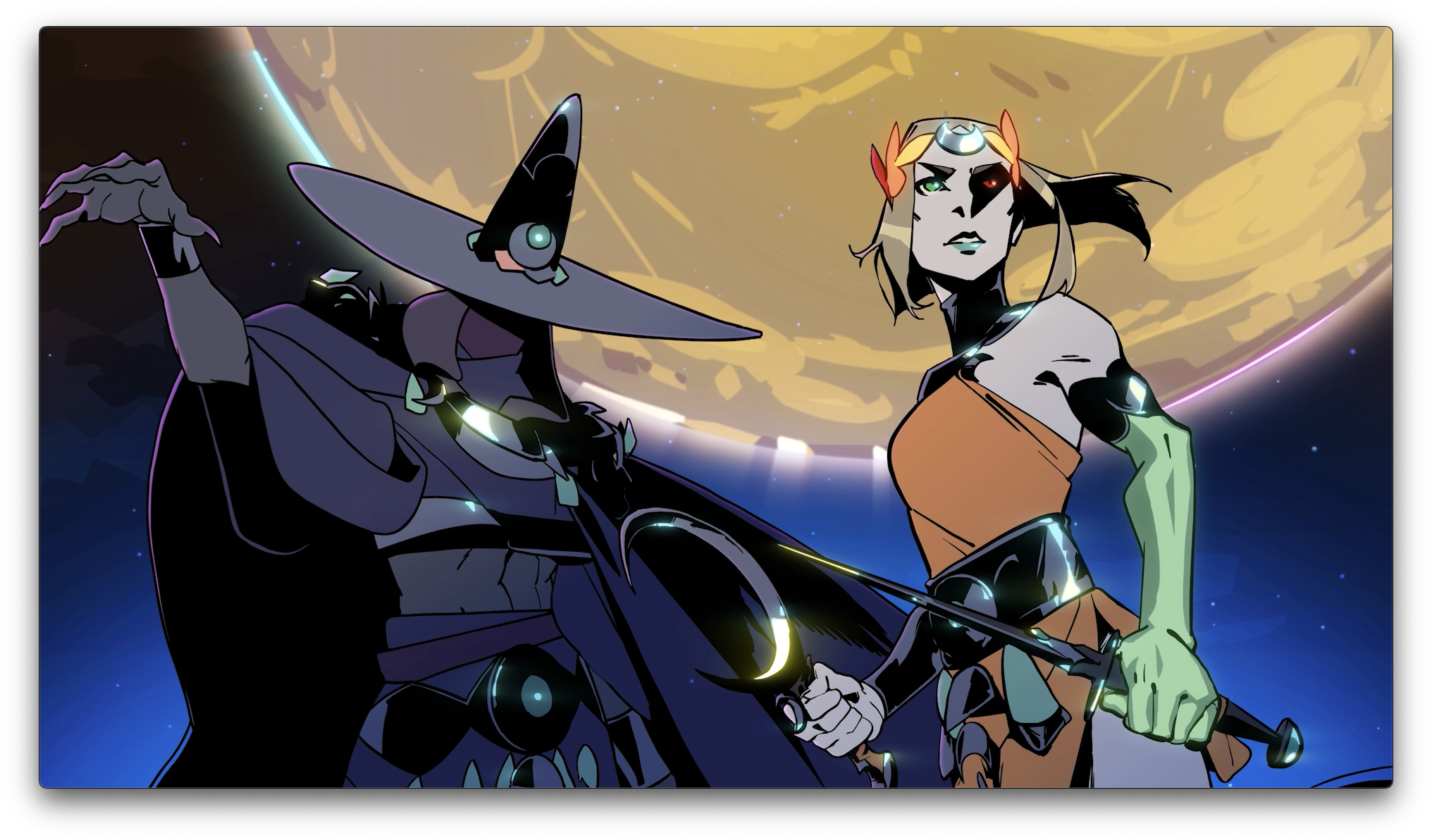
A roguelite, on the other hand, lets you carry some of your progress into the next run, which eventually allows you to become more powerful via new and unpredictable gameplay mechanics. Examples include Hades and Slay the Spire.
It’s safe to say that thousands of games have adopted procedural generation in their core gameplay loop, but most of the games in this new wave have a meta progression system that extends beyond each death suffered by the player. This means you might start your next run with more health, find more powerful in-game items in chests, or have starting stats that benefit more advanced play-styles.
In terms of this evolving nomenclature, I think that roguelites might well be labelled “lite” because the pain of your permanent death is somewhat softened by a small contribution to your overall progression through the game. Over time your ever-expanding knowledge of the game world and its denizens is supplemented by a strengthening of character and the discovery of new abilities.
This constant reinforcement to understanding, ability, and strength creates a snowball effect whereby the player becomes increasingly powerful. As you learn more about the world around you and find new gear, things can start to get easier. Yet many games try to counter this by scaling the challenge to match the player’s progression.
Take the game pictured below, the wonderful Crypt of the Necrodancer by Brace Yourself Games (an amazing rhythm-based game which is mentioned in my toplist of the best roguelike games). As you advance you can get more and more hearts, as well as find better weapons and spells, while also unlocking new playable characters and various practice modes. In a traditional roguelike, you’d start with the same measly three hearts EVERY SINGLE TIME.

The Berlin Interpretation
No, it’s not a spy novel, we’re actually talking about a meeting that took place all the way back in 2008, before the genre exploded. Therein a bunch of experienced players and developers attempted to pin down the nomenclature surrounding the roguelike.
While things have moved on since then, what the Berlin Interpretation did give us was some rock solid pillars to fall back on when discussing roguish game design.
- Procedural generation – The big one: roguelikes use procedural level generation to make sure that the dungeons/worlds that players explore are different every time.
- Permadeath – The true appeal of roguelikes rests in the reality that one false move can be your undoing. Permadeath raises the stakes and ensures that every step is taken with care.
- Turn-based combat and movement – To be a true roguelike a game needs to be turn-based. This makes sure that your actions are measured and not pressured by a ticking clock.
- Grid-based level design – Gameplay, particularly combat, takes place on a grid, so you can accurately measure distances in relation to your abilities and equipment.
- Resource management– A roguelike will give you a range of tools to play with, including weapons, armour, and potions. It’s up to you to use them creatively to solve any problems that arise.
- Player vs environment – Killing monsters/enemies is at the heart of the traditional roguelike, but monsters need to respect the same logic and laws as the player. As the genre has developed, environments have grown increasingly nuanced, even dangerous.
- Exploration – A roguelike is all about exploration and discovery, and the procedural generation outlined above ensures that players must leave nothing to chance as they encounter each new environment.
- Other things mentioned in these discussions were focused more on true roguelikes and thus included: ASCII graphics and the use of numbers to communicate information, the single-player nature of the games, and finally the focus on moment-to-moment gameplay over storytelling and narrative.
Bear in mind that this discussion took place before the great roguelike vs roguelite debate. However, even in these simpler times, some of the most pivotal figures in the community failed to nail down the specifics. As explained so succinctly on RogueBasin:
“Missing some points does not mean the game is not a roguelike. Likewise, possessing some points does not mean the game is a roguelike.”
What the meeting did do is formalise the debate around roguelikes, as well as define much of the terminology that we still use today.
What is a roguelike-like, then?
I’m glad you asked! The term roguelike-like implies a degree of distance from the original Rogue and its descendants, but acknowledges that several core themes remain intact, including permanent death and a fresh start every time you die.
This definition surfaced during the genre’s more recent rise to prominence – what you might call the post-Spelunky era. It was done to separate games that still took their spiritual lead from Rogue, from those that only borrowed one or two core mechanics.

In more recent years, the term roguelike-like has largely fallen by the wayside in place of roguelite, a catchall word that describes any game with roguelike features and a progression loop to give purpose to your dungeon crawling.
Rogue – the OG procedurally created dungeon crawler
Life is all about perspective, and the original Rogue was a fairly standard RPG for the time if you looked at it from a certain angle.
The game tasks players with a dungeon crawl to fetch the mythical Amulet of Yendor. The combat was turned-based, and the visuals rudimentary at best.
Except, the game’s basic features allowed its creators a degree of creative license that they embraced to the fullest. They used such simple building blocks for their dungeons that they were able to rearrange them for each new run.
The procedural generation pioneered here meant that the game world felt fresh and exciting every time. In a world of repetitive single-screen arcade shooters, for anyone with an active imagination, it was a digital dream come true.

From these humble origins, the game has gone on to have a lasting impact on the industry. Developers are increasingly adopting its core concepts, as it offers a great framework for replayability. Modern day examples include Hitman’s Freelancer mode, Prey Mooncrash, and God of War Ragnarök: Valhalla.
Who created Rogue?
Back in 2020, to mark the Rogue’s 40th anniversary, I tracked down one of the game’s creators, Glen Wichmann.
Glen was gracious enough to answer a number of my questions about the game he made with Michael Toy, whom he met at U.C. Santa Cruz when he was studying game design. (You can read the full interview over on Gamereactor).
Their collaboration started over a shared love of early text adventures, but eventually, they incorporated some of the new ideas being developed by Ken Arnold and Bill Joy respectively, to create a more intuitive action-adventure experience with gameplay that required more thoughtful engagement from the player.
Wichmann explained that they wanted to “be challenged by our own creation, so we could come back and play it over and over, getting a new adventure every time we played.”
It was this quest for originality and challenge that gave birth to Rogue, its namesake genre, and all of the roguelites that have followed since. Indeed, the word “roguelike” has evolved to mean so much more than it did in the years that followed Wichmann and Toy’s first forays in search of the Amulet of Yendor.
These days “roguelike” is a label that’s applied quite liberally, and very often incorrectly – even by the people who make the games, whether knowingly or not. However, the popularity of the term is because it has come to represent so much more than anyone could have reasonably expected considering its humble origins. Not bad for a 40-year old game that fits on an 80×24 grid of ASCII characters.