Returnal was one of the first games to feel truly “next gen”; a proper PS5-era title that would be hard to scale down to PS4. A game that leveraged the console’s 3D audio, DualSense haptics, and lightning-fast loading times to genuinely elevate the gameplay experience.
Saros is developer Housemarque’s attempt to evolve and expand on that formula, not as a direct sequel to Returnal, but as a spiritual successor that shares much of the same DNA.
The game takes place on a different planet, Carcosa, with a new story and cast, now led by protagonist Arjun Devraj.
Portrayed by Rahul Kohli, who you may recognise from Midnight Mass and The Fall of the House of Usher, Arjun is just as troubled by guilt and trauma as the previous protagonist, Selene… even if the plot delivery and its structure feel like a step down from that in Returnal.

Trauma and Guilt as Cosmic Horror
Much like Selene, Arjun Devraj is trapped in a recurring cycle on a strange alien world, but unlike Selene, Arjun is not alone. He’s part of Echelon IV, a team sent to Carcosa to investigate the disappearance of former Echelon expeditions.
As each cycle ends, you return to Echelon IV’s base, a hub where you can interact with a handful of characters and expand on the plot. It’s an attempt by Housemarque to build on the same themes of guilt and trauma we saw in Returnal, but it mostly failed to live up to the high bar set by the original.
Selene’s loneliness in Returnal reinforced the oppressive atmosphere and sold the idea of a character fighting as much with her own mind as with the hostile planet’s fauna and flora. By expanding the cast in Saros, the narrative became diluted and, more importantly, it broke the game’s flow.
Plot and Gameplay Mismatch
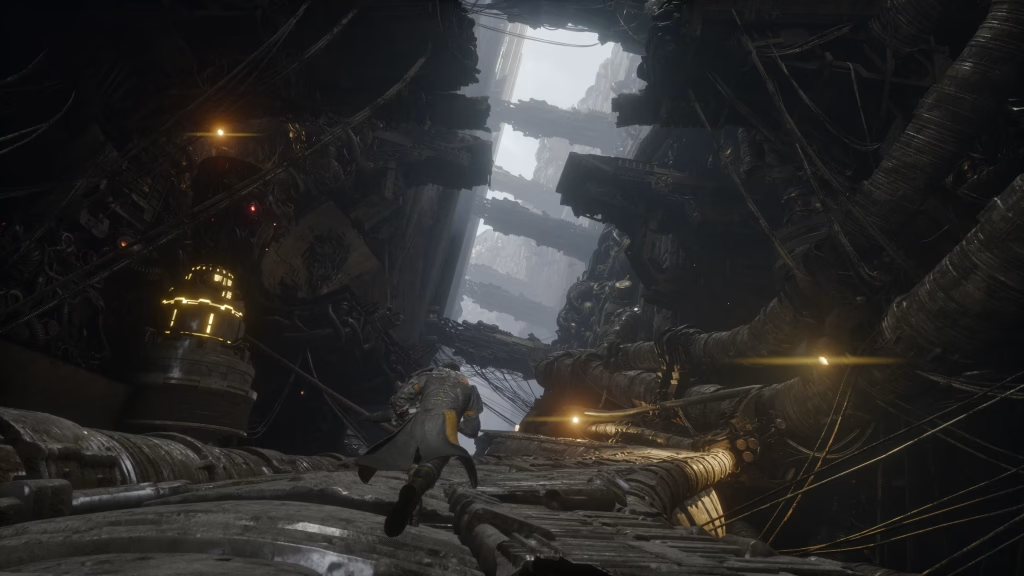
Saros is fast-paced, a roguelite packaged as an intense third-person action game, blending bullet-hell design with light exploration. It’s a gameplay loop (literally) built around momentum, constantly pushing you to shoot, dodge, jump, and sling yourself across the map.
Combined with near-instant loading times, this creates a highly addictive cycle that feels great to play, and makes you want to jump back in after each defeat.
But then the game grinds to a halt, asking you to interact with uninteresting characters, cryptic audio logs, and vague text messages. It’s a complete mismatch between gameplay and narrative delivery, as one system pushes you forward at full speed, while the other forces you to stop.
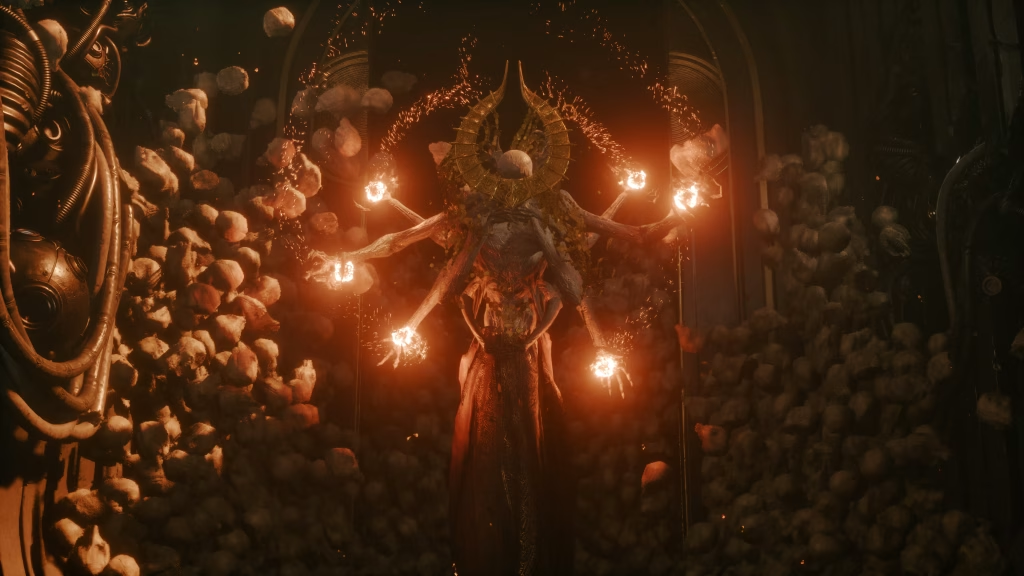
There’s a larger cosmic mystery to uncover, about the planet, the fate of the previous expeditions, and Arjun’s own past, but it’s too fragmented in its delivery. I eventually tuned out of the story, as it started to feel more like an obstacle to my urge to keep playing.
I appreciate Housemarque’s ambition to expand the narrative, but for me, it didn’t land, and Returnal felt far more cohesive as a package between gameplay and story.
Stronger With Every Death
Fortunately, Saros is a joy to play. Much like Returnal, it follows a roguelite structure, meaning you retain some progression between runs—even after defeat. As you move through the world, you’ll collect two currencies used to upgrade your character: Lucinite and Halcyon.
Lucinite is very common, found throughout the world or dropped by enemies. Upon death, you lose roughly half of the Lucinite collected during a run, although you can reduce that penalty by unlocking specific skills. It’s mainly used to improve Arjun’s attributes, including resistance, proficiency (which affects the level of weapons you find), and shield capacity.

Halcyon, on the other hand, is much rarer and isn’t lost upon death. It’s used to unlock more impactful perks, such as increasing the number of keys you start each run with, or even granting a “Second Chance,” allowing you to revive with a small amount of health.
Overall, this pushes Saros further into the “lite” side of the roguelite structure compared to Returnal, as it’s easier to grow stronger with each defeat. That said, there are limits in place to prevent players from brute-forcing progress—parts of the skill tree are gated behind bosses, meaning you can only advance so far before having to prove your skill.
“Easier” Doesn’t Mean “Easy”
I enjoyed these changes, as they made the experience more accessible without removing the challenge. This is still a demanding game, and you will die often, especially in the early hours.
There are also new modifiers that let you make the game harder or easier. These include options to negate the Second Chance, make enemies stronger, or increase the damage you deal, but there’s a catch.
The game uses a balance system where beneficial modifiers subtract points, while harder modifiers add them. These values are based on how impactful each modifier is, but the idea is to stay around zero. In other words, if you activate a benefit that subtracts two points, you’re expected to offset it with a disadvantage that adds two, keeping the system balanced.
Personally, I chose not to engage much with this system, as I preferred to experience the game as Housemarque intended, but it’s an option if you want to customise your experience.
As for the baseline experience without modifiers, I found it more rewarding than Returnal’s cycles, and overall, I found myself compelled to do more runs in Saros.
Gameplay is King. The Yellow King.
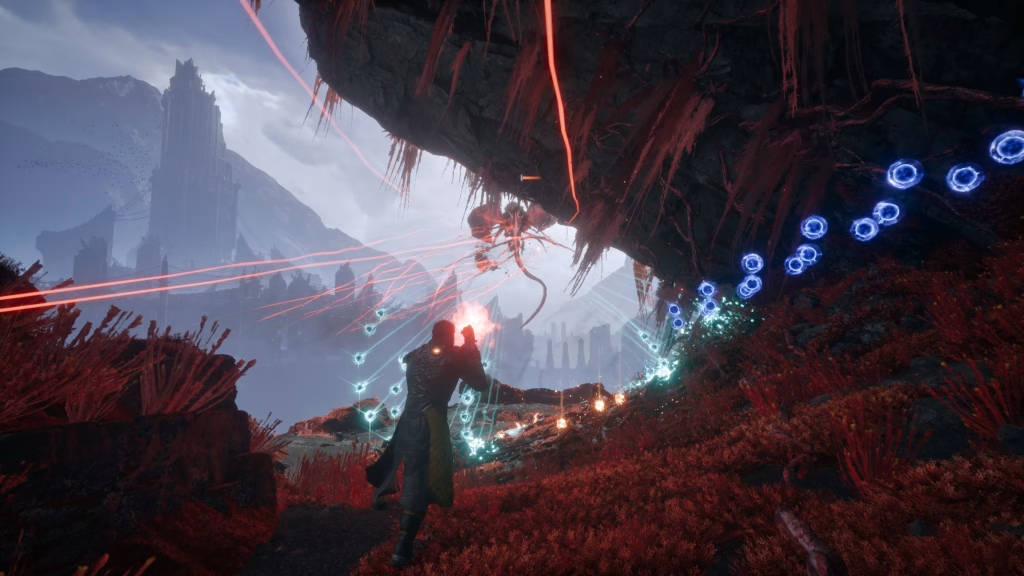
This is where Saros truly shines, as an evolved form of what we saw in Returnal. Movement is fast, demanding quick reactions to the barrage of yellow, red, and blue projectiles coming at you from every direction.
You can dodge (this time available from the start) and use a shield to defend yourself, although the shield shares the same energy bar as your special attacks. It’s a tight gameplay system that feels great to control, as you dash through enemies in what Housemarque themselves describe as a “bullet ballet.”
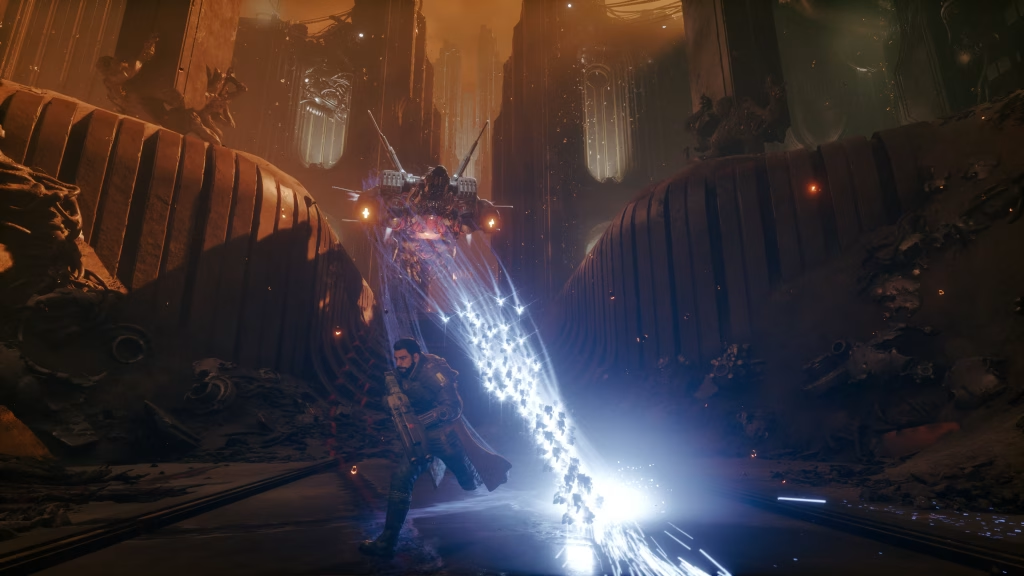
Enemy variety is strong, and the levels feature several optional areas, as well as ultimate challenges to discover. It’s very much a risk/reward design choice, and it’s up to you to take it or not.
There’s also a mechanic tied directly to the plot: the Eclipse.
At specific moments, you need to activate an eclipse to progress, transforming the current biome into a corrupted version of itself. Enemies become tougher, artefacts start rolling with both perks and drawbacks, and enemy projectiles become corrupted, dealing damage while also reducing your maximum health.
It also feels like a nod to The King in Yellow by Robert W. Chambers, a clear thematic influence on Saros.
A Marvel to the Senses
Just like Returnal, Saros is a technical marvel and a game that feels very much tailor-made for the PS5 ecosystem.
Visually, it’s stunning, featuring great detail at a large scale. The particle system is particularly impressive, and all of this is achieved without impacting performance. I haven’t tried it on the PS5 Pro, but the game fully supports the latest console, if you have it.
Saros is also a feast to the ears, not only by featuring superb sound design and score, but also in how it fully uses Tempest, the PS5’s 3D audio system.
Lastly, but not least, it features some of the best uses of the DualSense’s haptic feedback and adaptive triggers. Could it be played with another controller? Sure, but it wouldn’t be as compelling.

Combine all these elements, and the result is a gaming experience that feels elite, that feels like something that belongs in this generation.
This technical feat, along with the high-tempo gameplay, was more than enough to keep me going right to the end (both of them), in what is one of the best representations of roguelite design at a AAA level.
Sure, the plot didn’t win me over, but when everything else is this top tier, I’ll happily skip dialogue to keep shooting aliens.
Saros is out now on PS5 and PS5 Pro, and we played the game via access kindly provided by Sony.