I genuinely didn’t see this one coming. When Star Wars: Galactic Racer was first unveiled to the world, I paid it no mind. The Star Wars racing game occupied the same spot in my thoughts as GTA6: not my wheelhouse, and so not my focus. Except, of course, I was wrong.
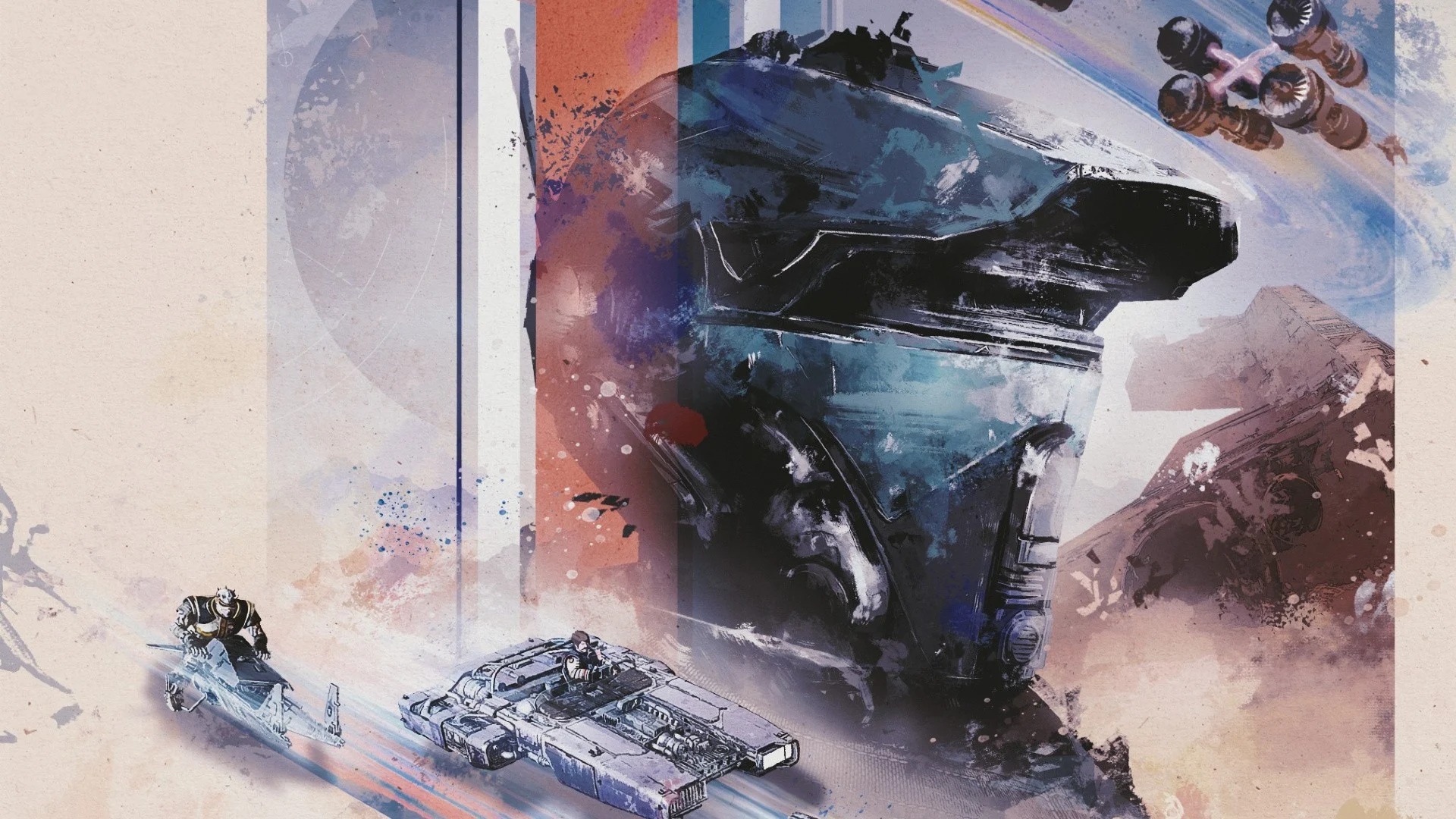
Star Wars: Galactic Racer is a new combat racing roguelite set in the iconic sci-fi franchise, and I don’t mind saying it right out the gate: it has absolutely no business being as good as it is.
A Star Wars racer for the ages?
More so than most, I’m going to focus on two things in my review. The first is going to be the quality of the overall game, and the second is the roguelite structure that holds it all together.

If you forget about all the branded trimmings for a moment and just focus on the nuts and bolts of it… As a combat racing game, Star Wars: Galactic Racer is a stunning achievement. It’s fast, it’s violent, and it’s impressively tactile. The sense of speed is so intense, and whether you’re ripping across open spaces or desperately trying to retain control in tight, twisting corridors, I frequently found the gameplay to be nothing short of exhilarating.
It’s the work of Fuse Games, a new studio made up of experienced racing experts based in Guildford, UK. Given the circumstances, I’m extremely impressed that the developer was able to put out such a cohesive game for its debut.
Not only that, but the IP has been used with deft assurance to build narrative structure around your racing. This is a distinctly Star Wars game, from top to bottom, and that extends across all aspects of the presentation; from the graphics and the audio to the UI, the audiovisual experience is first class.
I was routinely impressed by the level of detail that the developers have added under the proverbial hood. You can tell that there are some proper Star Wars nerds on the team because the theme is not a bolted-on visual wrapper. The visual finish and tactile feel are strong with this one, at least for the majority of the time.

The core part of any game like this is the racing feel. Naturally, the sense of speed is there, but it wouldn’t matter much if it handled like a lemon. It doesn’t, though; it handles just fine, with interesting cornering mechanics and an engaging focus on heat management and throttle efficiency. This is much more nuanced than just pressing X to go faster.
I will say that due to the roguelite structure, the handling is a little clunky at first, before you’ve levelled up and smoothed off the rough edges. But even during the early game, the devs have scaled the challenge quite cleverly via a short opening act intended to get you up to speed, before the game opens up properly and you can race everywhere.
The only thing I think I actively disliked was the cinematic camera. I had to turn the mid-race replays off completely because whenever I would take out an opponent, the camera switch would often scupper me, too. In a game about jostling for position and side-swiping your enemies in tight spaces, I found that this was not the cinematic camera angle that I was looking for.
Otherwise, I think Star Wars: Galactic Racer is borderline perfect when it comes to the delivery of theme, presentation, and gameplay feel.

A Roguelite One
Not only is Galactic Racer a good Star Wars game, and arguably the best combat racer since the last new Mario Kart, but it’s also a roguelite, which makes it of particular interest to me.
Star Wars is a massive IP, and this can be heavy baggage in many cases. However, in this instance, I think Fuse has used the IP to build a clever framework around Galactic Racer. It has you playing as a faceless racer called Shade, and you’re out for both revenge and glory. The story treads on themes of empire and oppression, and follows Shade’s battle with a corrupt racing kingpin. In fact, the story is a lot more engaging than I thought it was going to be, although the execution isn’t always perfect.
If you’re going to make the most out of your time with Star Wars: Galactic Racer, you’re going to have to get comfortable with just a smidge of ludonarrative dissonance – where the gameplay and the story don’t quite align as elegantly as they should. It’s not a terrible, game-breaking problem, but it’s also not as well structured as Hades.

The constant failures, campaign restarts, and even the epic explosions you suffer on the track do sit slightly at odds with the narrative and its consistent delivery. However, if you can get comfortable with the squiffy pacing of the story in relation to your progress, I think you will likely have a good time with it, as I did.
When it comes to the roguelite campaigns (yes, plural), there is a lot to get to grips with. For starters, the six different planets you visit each offer different technical challenges, such as freezing ice or acid that can mangle your speeder. These added dangers give real texture to the environments and your interactions within them.
There are lots of racers to contend with, too, both on and off the track. You’ll make friends and enemies, expand your roster of vehicles, and unlock new abilities to see in the draw pool for future attempts.
Most of the events are races, but there are speed challenges and elimination matches to compete in. You can progress with a small amount of flexibility, choosing your battles across an event map connected by nodes – to be fair, this is probably the most familiar roguelike element here.

Each new world starts you off in a little hub area where you can walk about and talk to other characters, including your four-armed Scouse sidekick, Hibi. Here you can make repairs or buy upgrades, and you can even take part in flashback races, which are super cool and not for spoiling here. Then, once you’ve done your business, it’s time to hit the track proper and choose your path through the events ahead.
As this is a roguelite, your progression extends over multiple attempts, and as such, your ship/s gets stronger and faster the more you play. You can also further differentiate your stats by choosing from an ever-expanding collection of abilities, ship-boosting items, and build-enhancing favours.
I think it’s fair to say that theory crafting isn’t the main focal point here, and the different builds offer subtle variation rather than massive points of difference. That said, the longer I played, the more I appreciated the depth that is on offer – you can really fine-tune your speeder to suit a personal style. Eventually I had mine charging up energy via takedowns and thus leaning into my aggressive play, although the auto-pilot was quite useful when I was still finding the pace.
Is it worth taking out for a spin?
If you want more to do outside of the campaign, there are character-based challenges to work through. These mini campaigns let you play as all of the ensemble characters, and each one gives you a sequence of different scenarios to work through.

There’s more speeding if you want it, as you can set your personal bests via the time trials in the Arcade, for your friends to beat. Finally, there’s online multiplayer if you want to test yourself against other racers from across the Galaxy – via crossplay, if required.
As you might expect, the main focus for me was the roguelite campaign, and it is here that I think Star Wars: Galactic Racer has really delivered. There is some unavoidable repetition during subsequent replays, and losing a lot of progress is always frustrating no matter the game, but every time I failed, I was keen to get back in my speeder and have another go.
The core racing is fantastic, the presentation is top-notch, and the structure does enough to keep you on the hook for “just one more race”. I played Star Wars: Galactic Racer until my thumbs hurt, and then I played some more. It might not be the greatest of all time, but when it comes to the best combat racers you can play right now, it definitely earns a podium finish in my book.