Astral Ascent almost snuck past me, but once I’d clasped eyes on its dreamy pixel-art visuals, I needed to know more. I’m currently enjoying my journey through the game, but even several hours in, it’s clear that I’ve only scratched the surface of its many systems.
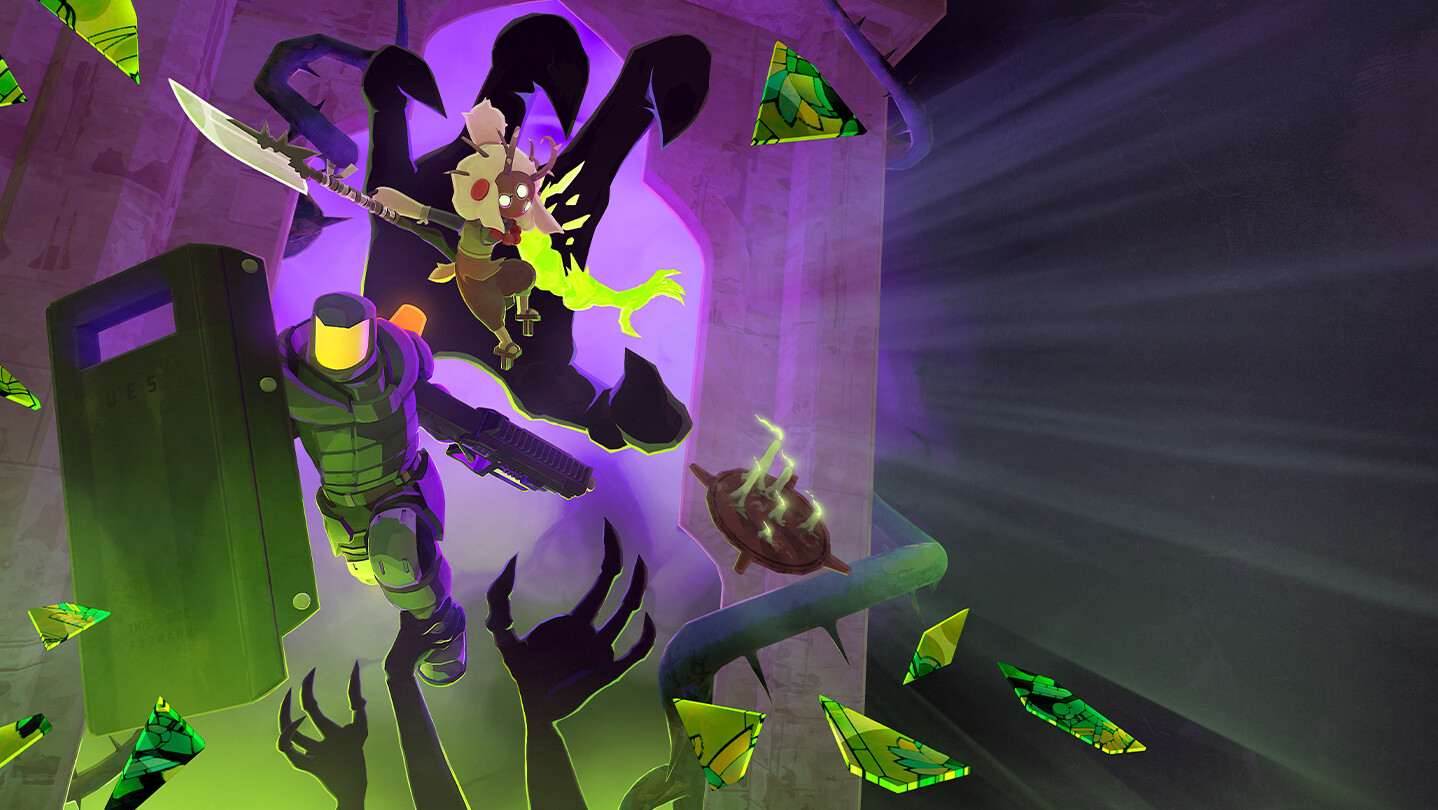
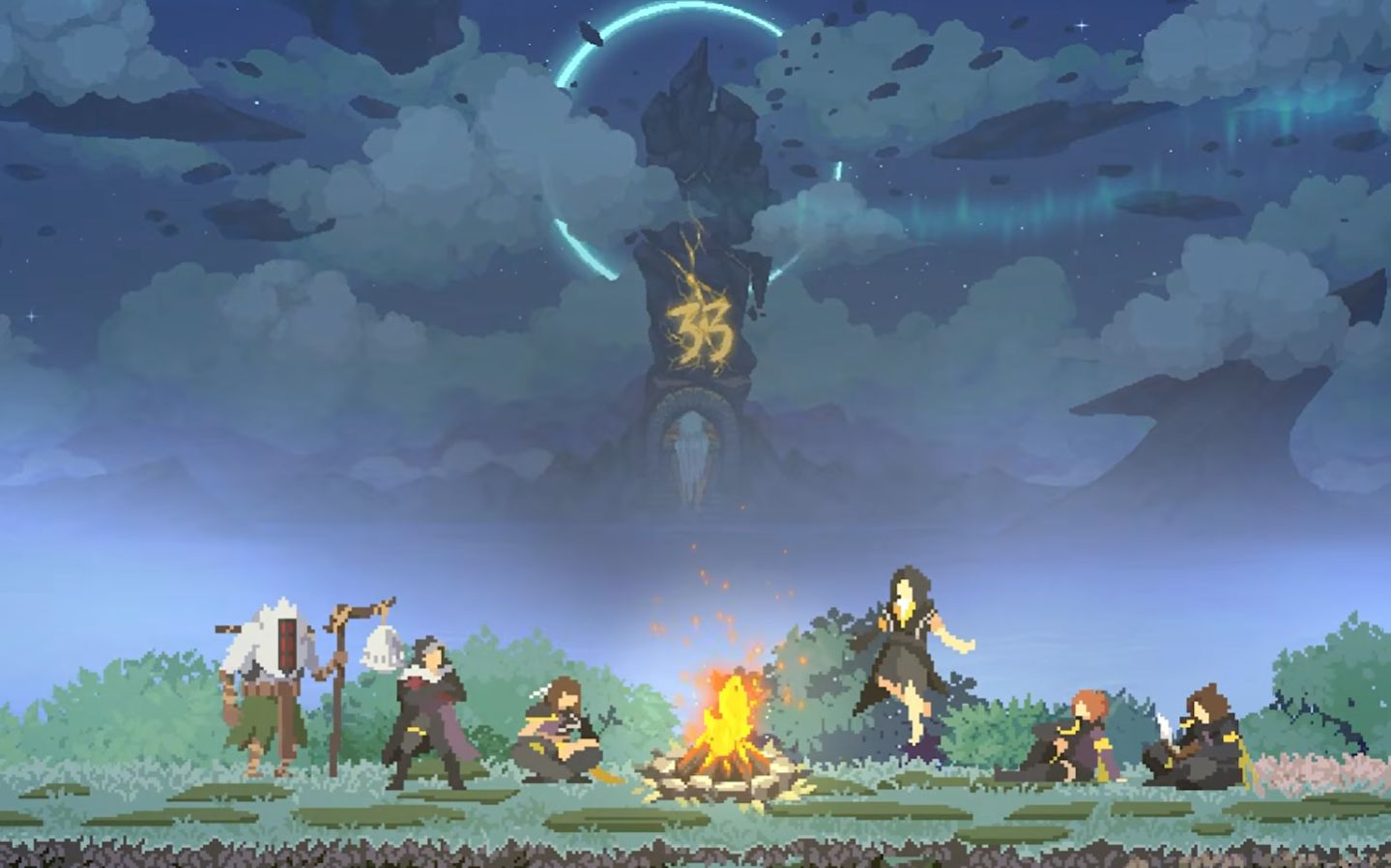
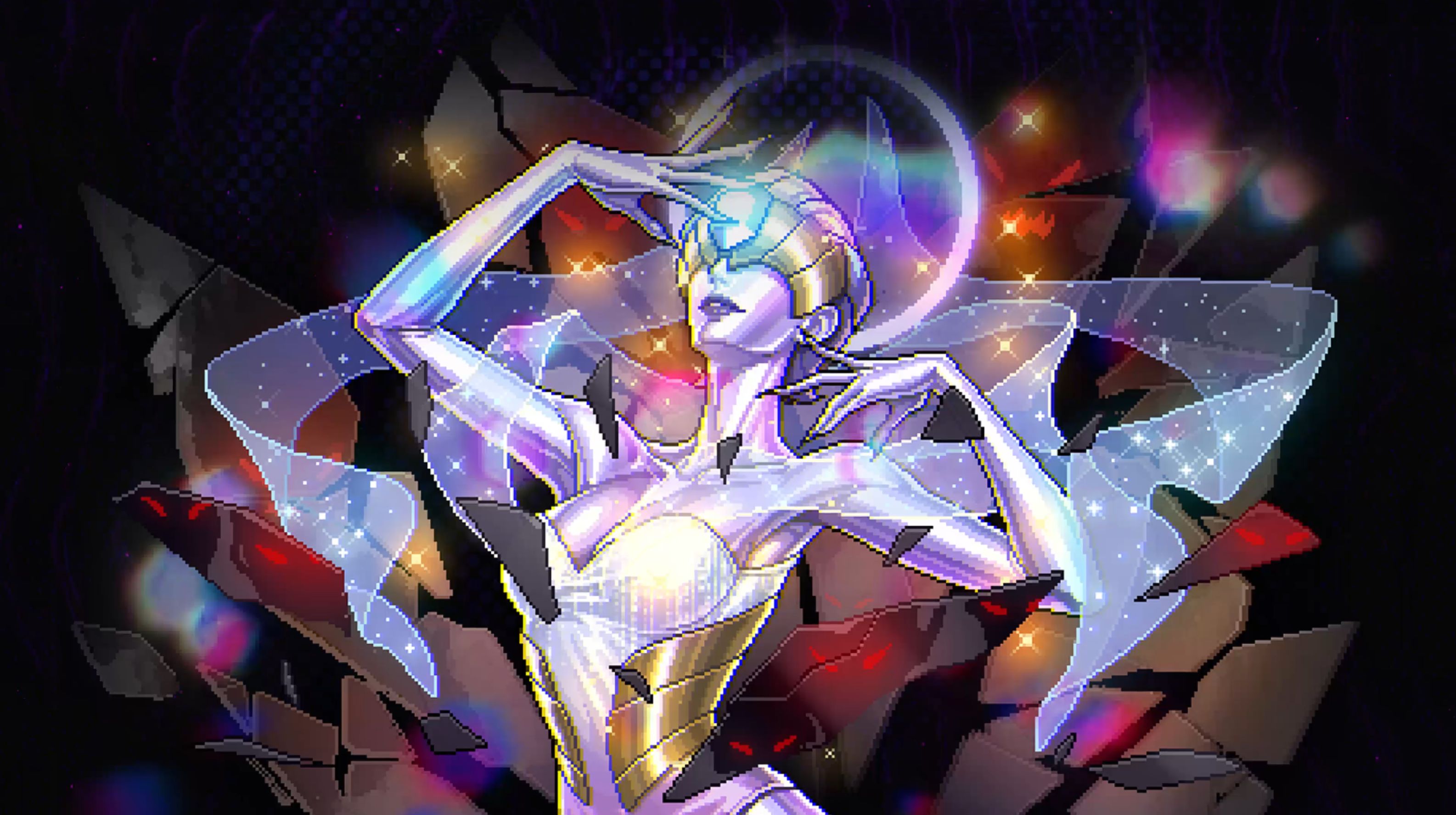
As you can see from the screenshots attached to these launch day impressions, Astral Ascent is an absolutely stunning video game. It has been developed by a French studio called Hibernian Workshop, and they’ve gone back to basics to create something that still manages to feel fresh and exciting in 2023 – that’s no easy thing to pull off. I’m reminded of the swagger and sway of the original Prince of Persia, but modernised just enough that it doesn’t feel like you’re playing a game from the long distant past.
This action platformer is steeped in zodiac lore, so if you know your star signs, you’ll already be ahead of me in terms of overall comprehension. I know that I’m a Libra and that means I’m good at balancing weights in both hands, but otherwise I’m fairly clueless about that sort of thing. It didn’t matter, though, and if you’re coming in cold like I did, you won’t be on the back foot.
Astral Ascent and the Zodiacs
In Astral Ascent, players are locked in a weird, mystical prison that floats in the sky. More about this back story is revealed via memory fragments that are uncovered during play. Initially, you’re playing as an amnesiac assassin called Ayla – and together you’re going to uncover what’s going on, who you are, why you’re all prisoners, and then bust your way out.
I’m still working things out and I’m certainly intrigued about the setting and the characters. The drip feed of information can be a bit convoluted at times, but overall, based on what I’ve seen so far, I think the devs have done a really good job with the world building.
As explained at the start of the game, it’s our turn to try and escape this weirdly lovely floating prison. It’s called the Garden and it is filled with strange, friendly anthropomorphic animals who have been training you to escape. To get out, you’ve got to run a series of side-scrolling gauntlets filled with violent critters, culminating in battles with Zodiac Guardians and deadly mini-bosses.
On your way to the big battles – naturally there are 12 to beat – you’ve got to explore a number of rooms. Each one has a reward, but they’re also filled with strange creatures intent on taking you down. It’s during these battles, and then in the subsequent boss fights, that you get to play around with Astral Ascent’s magic system.

Spellbinding combat
The combat system is fairly straightforward in one key respect: you charge up your mana by hitting your opponents with physical attacks. The point is, you’ve got to get stuck in and ruffle a few feathers in order to get access to your spells. Once you’ve landed enough blows, the next spell you’ve got lined up will be ready to execute.
It’s a straight forward system that reminded me somewhat of Doom Eternal, which had a three-pronged set-up, where each attack type facilitated another down line. It’s a bit simpler here, but it keeps you engaged during combat and on the front foot. I was always darting in and out with my dash, looking to land the hits needed to pull off the more powerful spells.
Of course, it’s a roguelite, so you’re alway trying to avoid taking so much damage that you die because each death means going back to the beginning. Death is inevitable here and a degree of failure is part of the experience. Yes you’ve got to start from scratch after every death, but as you get better, those deaths will get further apart.
While the physical combat is functional and fine, Astral Ascent comes to life when you start mixing in your magic attacks. It’s quite the thrill when you pull off the right spell at the right time, and the system is intuitive enough that this sort of purposeful aggression is accessible.

A magic system
You start things off with a standard magic spell that takes up all four of your attack slots. Your first decision is then choosing between two random spells, to replace one of the four you’ve got. After that, you’ll be given loads of chances to add new spells and completely overhaul your spell book.
Each of your spells can be given additional traits as you play. This means that you can specialise each spell over the course of a run, making it more effective with added effects, such as the chance for your foe to catch fire or get hit by a slime ball. Not all of these enhancements carry over between runs, but you can unlock slots to make yourself more upgradeable down the line.
Although you start with the same four spells every time, it won’t be long before you start to become familiar with a number of the other spells that are on offer and your decision making becomes more confident. What’s really interesting is how these spells change the combat dynamic; some push you into battle like a tornado, while others hold you back and have you firing projectiles at nearby enemies from a bit further back.
It wasn’t long before I was thinking long and hard about the positioning of the spells in my attack order, in terms of where I would like to be during combat, and how I’d like to move around the space and link together my attacks. Of course, you’ll be balancing the spell casting with combat, but after a while a nice flow develops.
On top of the standard spells there are passive magic abilities that help during combat. For example, I have an ethereal sword that follows me around, darting off briefly to swipe at nearby foes and chip away at their health. On the lower-level minions, it’s really quite effective and it freed me up to focus on taking down the bigger enemies.
You’ve got to have your wits about you in Astral Ascent, as all damage is costly. In many ways it has a very traditional roguelite gameplay loop, and during your first few runs you are very vulnerable. After a while, though, you’ll have upgraded some spells, beefed up that health bar, and generally gotten to grips with the controls, of which there are several.
You’ll need to have a good grasp of all of the basics in order to defeat your first boss. I’ve only fought a handful of them, but these battles seem well made with interesting attack patterns to learn. They’re filled with dramatic attacks and there’s a bit of back and forth between the characters as well.

Astral Ascent’s meta progression
There is a lot going on, and your first runs are going to be firmly focused on learning the ropes and working out how the various systems interlink. That’s not a criticism, because I think the level of complexity is going to be a blessing for those players who dedicate lots of time to the game, however, it’s not what you would describe as casual.
Your home base is filled with characters who are all on standby, ready to help you in different ways when you visit them between runs. Through these characters you can track your progress, tweak your colour scheme, change characters (more on that shortly), and improve core stats, such as your health. If you’ve played something like Hades, which has a similarly complicated meta-layer, you will be able to appreciate the scale of what has been built here.
I actually found the pacing of the progression system a little overwhelming at first, with new things introduced before I had fully grasped the previous mechanic’s full significance. Maybe, just maybe, that one’s on me, but after I’d done around ten full runs, I felt like I had worked out the most important things, and I was no longer making ignorant decisions. Importantly, I was also starting to have quite a bit of fun.

Astral Ascent launch impressions
This is a game that has been through a long and public Early Access development process on PC, which is the platform I played on for this review-of-sorts. Since then, it is also releasing on PlayStation 4/5 and on Nintendo Switch, but not on Xbox.
Astral Ascent is stuffed full of things to do and learn, and while I’ve not beaten it yet, I will be going back for more. It has got me intrigued and I want to know more about the floating prison, the Zodiacs, and the characters. The combat is engaging, both during standard encounters and boss battles, with layers of complexity and nuance that have been revealed over time and that clearly have more to show.
I think the thing that makes Astral Ascent really stand out, however, is the audio-visual design. I’ve commented on the understated pixel-art style, but I also really appreciate the studio’s use of colour and the enemy designs I’ve encountered thus far. When you start stringing powerful spells together, the screen can really light up, and I was constantly impressed by the way it all looks.
The music is just as good. The parts of the soundtrack that I’ve taken notice of so far have been quite enchanting. The VO is pretty decent too, and it’s clear that developer Hibernian Workshop has poured a lot of love into all aspects of its creation.
Astral Ascent feels like a meticulously crafted video game, where all aspects of its construction have a place and a purpose. I can’t say for sure how it will evolve post-completion, but I’ve seen enough to know that I’m going to keep on playing so I can find out.
The story so far…
Time will tell whether Astral Ascent ends up being over-encumbered by the weight of its many systems, but right now I think the game is striking the best balance possible, given its relative complexity. The game’s elegance was enough to pull me through any moments of initial confusion and doubt. Beyond that, the evolving spell system does a great job of mixing up agility focused combat with devastating magic attacks to create engaging moment-to-moment gameplay.
Things change up even more when you start playing with a second character (apparently there are four but I’ve not tried them all yet), and you’ll encounter different mini-bosses at different points in the timeline, which kept me on my toes.
For the co-op, with so many systems at play, you’ll need to make sure that both of you are up to speed on how everything works. If that’s not the case, the confusion caused by a learner driver will make an already chaotic screen even harder to parse.
In conclusion, I find myself returning to the richness of Astral Ascent’s design. This is a painterly platformer with some lovely pixel-art visuals and immersive audio design. It takes a while to get going because there’s simply so much going on, but once it clicks and ignorance turns into understanding, the scale of the game’s potential comes into full focus.
Astral Ascent is out on PC (tested), Playstation 4/5 and Switch.