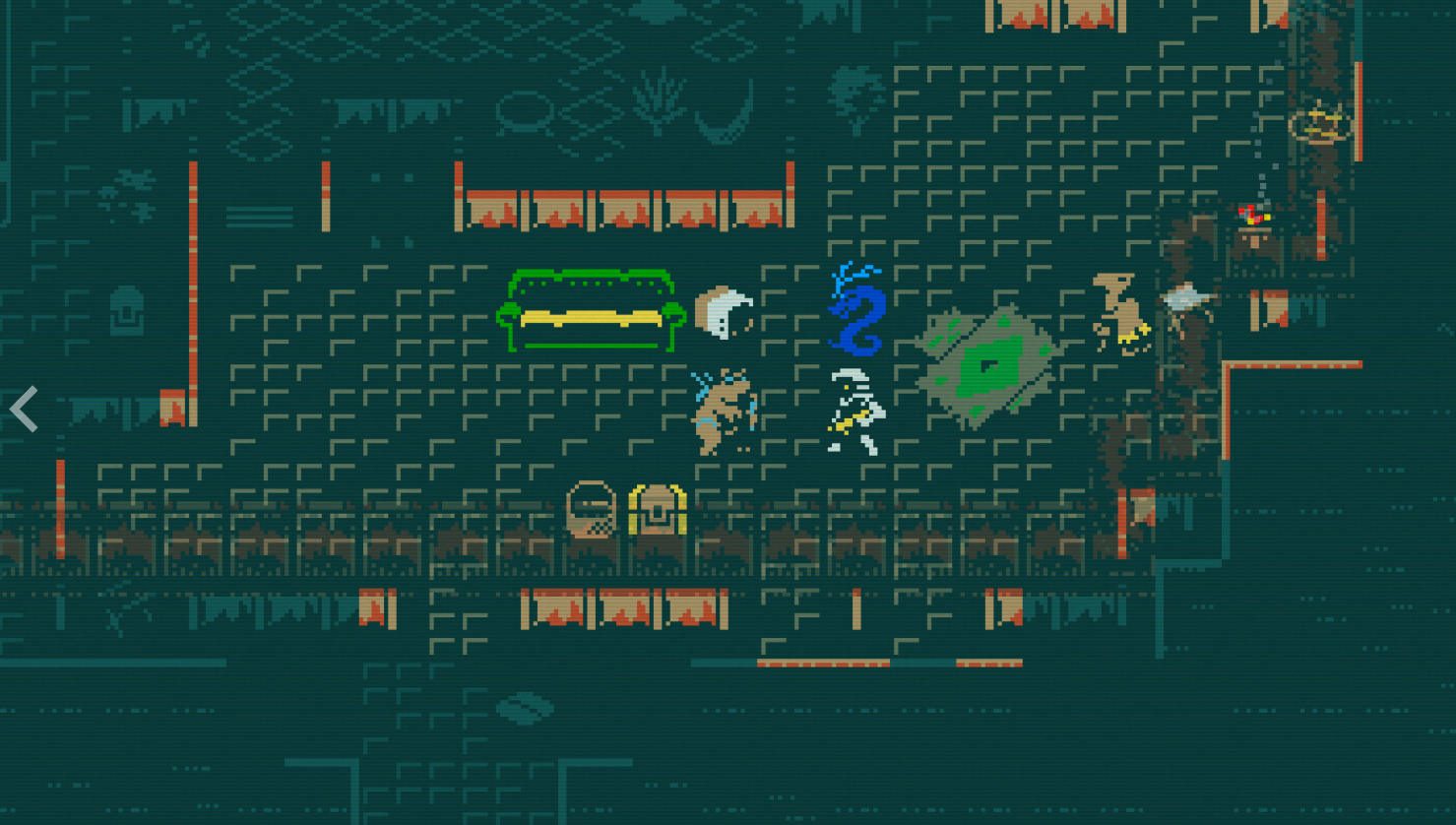
Every single action makes a difference in Forgotten Mines. In a similar vein, every pixel is made to work hard, and yet the game’s simple art style is able to communicate enough information to keep you pushing through the mines that you hope to reclaim.
Each fantasy arena is a cramped 8×8 grid and is filled with goblins and orcs, and you can leave none alive that you encounter. In keeping with roguish tradition, there is a stern challenge here, and pretty much every run I’ve attempted has ended with ignominious defeat, one way or another.

Nobody likes to lose. Yet in Forgotten Mines I found defeat to be quite punishing at times, even more so than one would expect from a roguelike adjacent game. Everything would be going great; I’d have my unit of three tooled up with good gear, bristling with powerful attacks and moving together like a well-oiled SWAT team in Rainbow Six. Then I’d meet a boss and get my ass well and truly kicked.
Sometimes I didn’t even get as far as the boss before I was impaled by a difficulty spike, and they were probably the biggest frustration I had. Having said all that, I really enjoyed the challenge that leads up to those bumps in the road, and I’ve kept coming back for just one more run because I can feel myself getting better. Maybe next time, eh?!
What is Forgotten Mines all about, then?
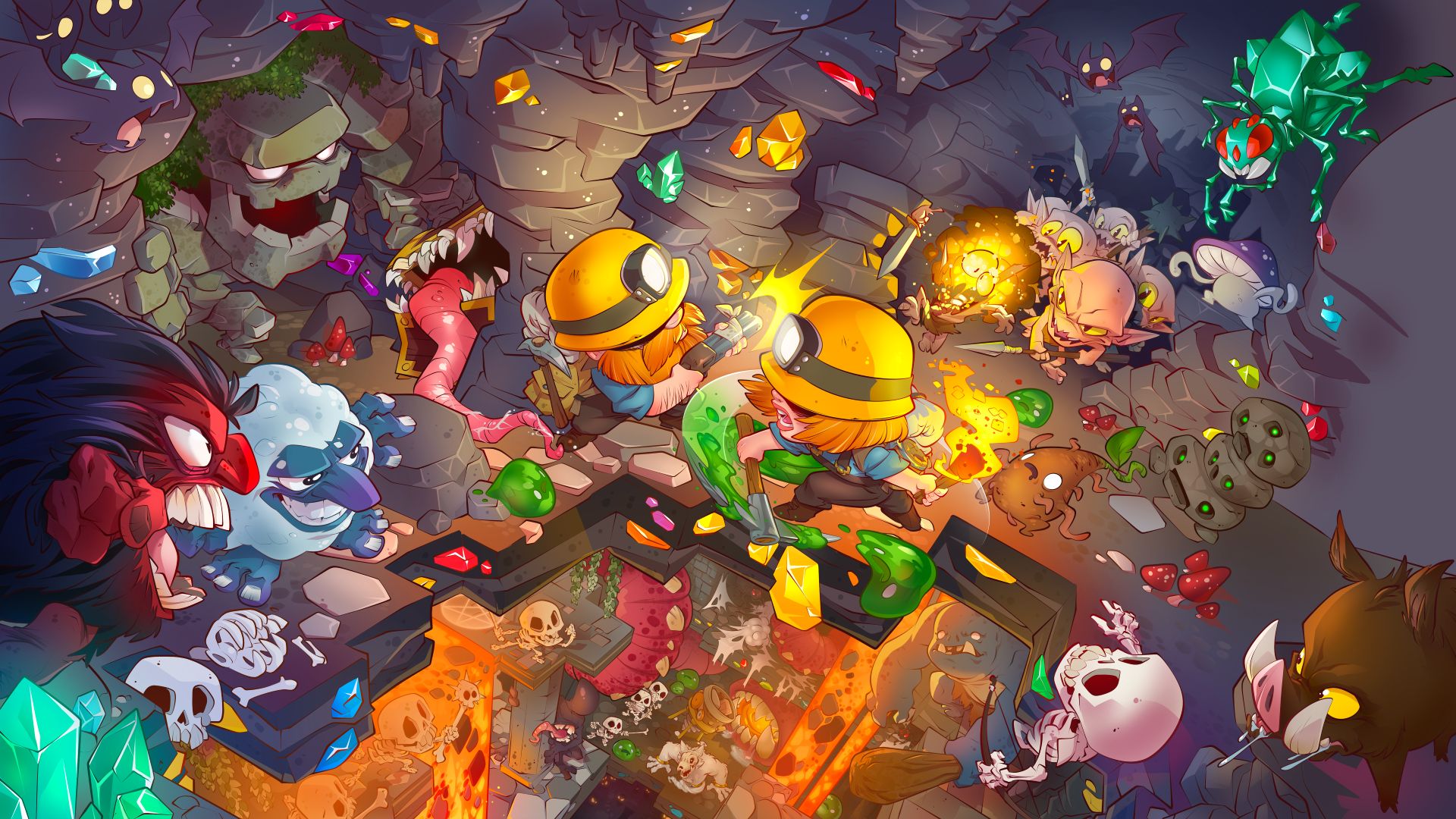
Developed by Cannibal Goose, this pixel-art tactics game incorporates roguelike ideas and puzzle-combat design to create intriguing skirmishes where you take a team of three dwarves and humans through a series of dungeons filled with monsters and loot.
Each little map is tight and focused, which leads to early confrontations that can usually be resolved within the usual eight turns. Taking longer than that is basically a fatal error because a second wave of enemies arrives and you need to clear them within the next eight turns. Apparently there’s another wave after that but I’ve never stayed alive that long.

While the dwarves are expendable and are generated anew after each busted run, there is progression via upgrades and trinkets that improve your damage output, and so on. The upgrade system involves spending hard-to-earn resources such as diamonds on new unlocks that expand your tactical options for future attempts. In fact, there appears to be an impressive array of new classes, although I only had time to unlock a handful of them.
The balance between good and bad
Even with this roguish progression system, the painful defeats often arrived abruptly. Almost as frustrating was knowing that losing one of my three dwarves in an earlier battle was pretty much a prolonged death sentence and I had absolutely zero chance in the upcoming boss battle, if I made it that far.
I’ve complained a little, but at the end of the day, Forgotten Mines has still managed to get its claws in me. I’ve enjoyed learning how to build a team and then optimise their positions ahead of battle, and I think there’s great potential in the streamlined inventory and ability systems. The graphics are cute and your equipped items are on show while you play, which was another appreciated touch.
There’s a good game here, but sometimes I found its best moments were having to contend with challenging difficulty spikes that are often so sudden as to feel quite harsh. The ability to do-over a battle and start from scratch was a welcome feature that I used a lot, but even second chances weren’t enough to turn the tide of many battles wherein defeat felt all too inevitable.