One of the things I’ve loved most during my relatively short time running Rogueliker is discovering cool little roguelike games that might otherwise have slipped under my radar.
While pulling together our last monthly update (apologies for the shameless plug), Grind Survivors was one that caught my eye, and the stars aligned when I found a code waiting for me in my inbox.
Developed by Polish studio Puska Studios, the game is a fast-paced Survivors-like that gives players a wealth of options when it comes to modifying and upgrading their firepower.

What is Grind Survivors?
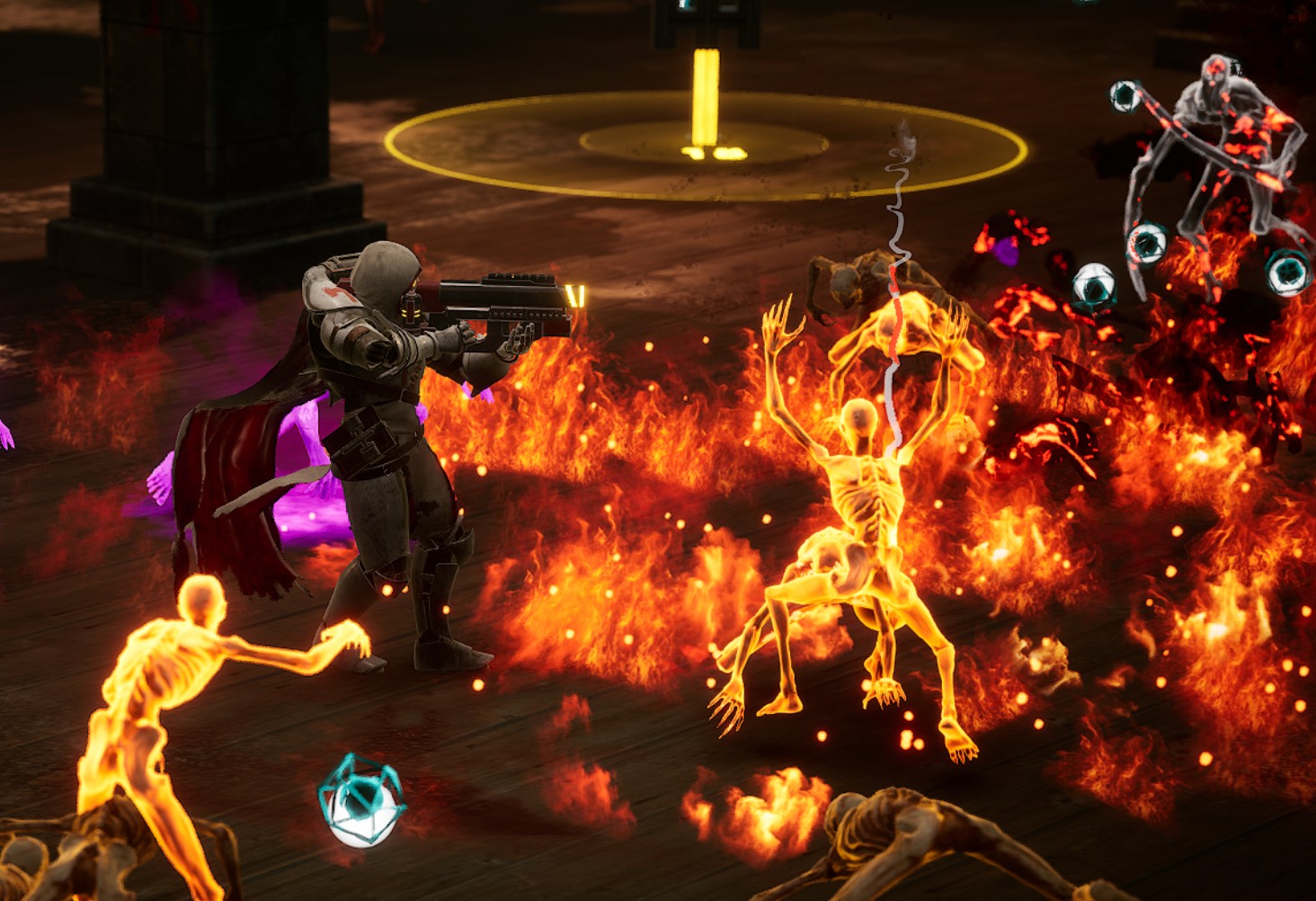
Set in the depths of hell, Grind Survivors puts you in the boots of a badass demon hunter mowing down unending waves of hellspawn.
Structurally, runs follow the familiar Survivors-like formula, with players navigating large open arenas, gunning down enemies to gather XP before crafting an unstoppable build from a selection of upgrades.
One thing that Grind Survivors does well is introduce zones scattered across the map that reward you with stat upgrades for defending them. It might sound like a small addition, but I liked how it keeps you on your toes, forcing you to strategically decide which zones to tackle next to patch the weaknesses in your current build.
While it’s fairly derivative in some respects, the action is tight and fast-paced, and I’m a big fan of the game’s comic book–style visuals.

Guns, guns, and more guns
The biggest way Grind Survivors sets itself apart from the genre is through its procedurally generated loot and deep weapon upgrade system. When you take down foes and bosses, there is a chance they will drop a weapon and these come in a variety of rarities and types from revolvers, to dual SMGs, and shotguns.
Where things get really interesting is at The Forge which you can access in the menu between runs. In the Infuse sub-menu, you can combine five weapons of the same type to create a single weapon of higher rarity. This new weapon inherits all the randomised stats and affixes from the weapons you selected, meaning the possibilities are virtually endless.
Another neat system was the very risk-for-reward heavy Improve system. Here, you can level up your weapons, boosting their damage and critical damage stats by spending ashes collected during runs. The higher you level a weapon, the greater the chance of losing your progress, making it a real gamble if you’re chasing top-tier loot.
The Reforge system adds another way to roll the dice on your weapons, but in a way that can be tailored to specific styles. You can completely randomise a weapon’s stats and affixes, which can turn out better or worse. You can keep rolling the dice, but the cost for randomising the weapon ramps up each time.

What next for Grind Survivors
This isn’t a review of Grind Survivors, and it’s too early to say whether I would give a firm recommendation, but I’d at least encourage PC players to check out the demo on Steam.
I had a good time experimenting with my weapons, fusing multiple guns together and rolling the dice to see what exciting combinations I could create. Whilst being fairly typical of the Survivors-like formula, the moment-to-moment action is solid and each run felt different.
I’m already looking forward to returning and exploring the different player classes, scaling difficulty levels, and variety of biomes to experience everything Grind Survivors has to offer, and I’ll let you know how I get on.
Grind Survivors is out on PC, PlayStation, and Xbox. I played via access kindly provided by the publisher and their loyal customers in PR.