I’ve been covering The Game Awards since they first started. In fact, for a time, I was one of the editors who used to coordinate the votes of their internal networks, to send over to Geoff Keighley and his team for the big count.
Awards can and should be a fun evening of celebration, and I’ve always viewed this particular event as a good chance for triple-a teams to celebrate and promote their big-ass games. A key part of the event is the trailer show that punctuates the awards, and that’s important in a world where moments when everyone is looking are few and far between.
But let’s not pretend that this is a genuine meritocracy, especially when there is so much confusion around things as simple as which games should be included in which categories. When it comes to indie games, that stuff matters.
Indie Spirit
It didn’t escape the attention of many people that the indie categories are pretty thin on genuine indies this year.
The term has come to mean “digital” rather than “independent”, much to the detriment of genuinely independent developers who are making their games without the safety net of publisher support. Yeah sure, Clair Obscur: Expedition 33 is a great game, but it’s not an indie.

There are plenty more similar cases within my own arena of interest. Absolum and Ball X Pit are both games that I’ve covered this year. Both are excellent, but both were made with publisher support.
That’s not to say that we shouldn’t celebrate games of that size. These are games which might struggle to make an impact against titles made with the biggest budgets and using the most well-supported teams.
For what it’s worth, while we could create a new category for indie publishers, the fairest way would probably be to band things by how they were priced at launch. That way a game will be judged much more closely against the value it offers the consumer, than any other metric.
Megabonk (and the point)
Anyway, I’m taking a really long time to get to my point, and to the game at the centre of this emerging story.
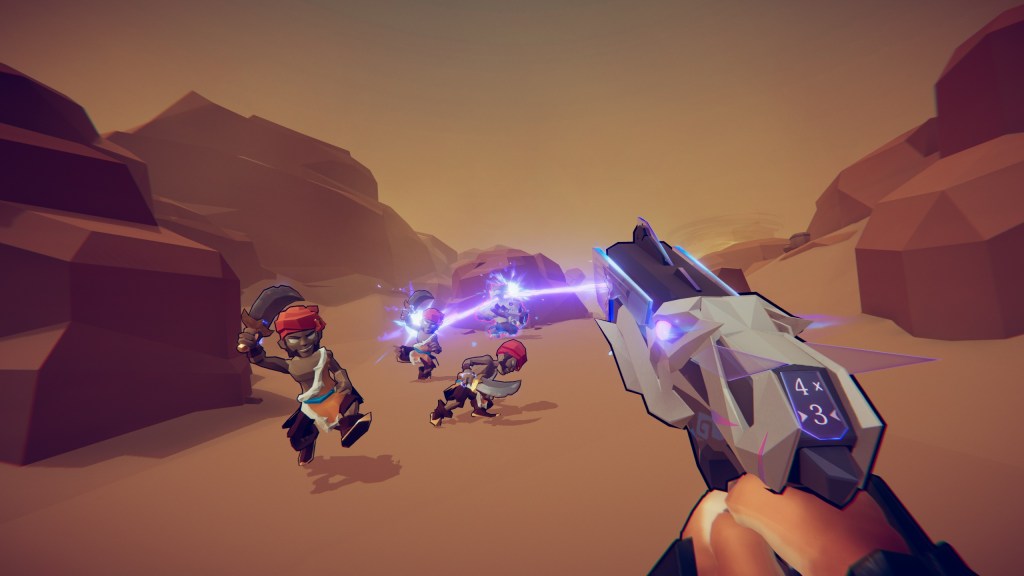
Megabonk is the name of the game, and it’s a fantastic auto-shooter that blends the best bits of Vampire Survivors with the high-octane energy of Risk of Rain 2 (you can read my review here for a deeper opinion).

Megabonk is the talk of the town this week, after developer Vedinad made the bold decision to withdraw from the category that it was entered into at this year’s Game Awards: Best Debut Indie Game.
The reason why: it’s not a debut game.
Fair play. I think we can all admire the honesty and integrity of the game’s creator, who had previously published games under a different name, and confirmed that to the organisers while removing himself from consideration.
That leaves the Best Debut Indie Game woefully bereft of genuine indie games, with just one independently published game on the list, and that’s a bloody shame.
I mean, looking further into the category list, by my count, there are only two indies in the main Best Indie Game category: Hollow Knight: Silksong and Hades 2 (speaking of which, I’ve just finished writing a round-up of all the categories that Supergiant’s sequel has been nominated in at the TGAs, if you want to get behind it).

The rest, while not triple-a, were all funded by publishers and supported during their respective releases.
Forgetting for a moment that, of course, there’s private investment going on in the background, the only the genuinely self-published games are still from smaller studios operating at the very top of their game, with the funding they needed to make the games they wanted.
So while I applaud Vedinad’s decision to walk away from the category that Megabonk was nominated in, for me it highlights more than ever just how underrepresented proper indie games are on the global stage, especially in the category supposed to be championing them.
And as I said before, it’s fine that big games have their moment, they need them to keep the marketing machine turning over, but should we really be claiming to honour indies, when that’s not really what’s happening here.
Anyway, as someone who keeps their nose pretty close to the ground when it comes to proper indies, if you want to get behind an indie developer, I suggest you check out the following games that have been released this year, all of which have been self-published.
- Star of Providence launched on Nintendo Switch, with a massive overhaul on PC.
- Rift Wizard 2 is a refinement of the original and an extremely clever turn-based roguelike with loads of cool systems.
- Hades 2, obviously.
- Megabonk should be in the main category, in my humble opinion. My “hours played” says so, too.
- Dog Witch is a more recent release, but I really enjoyed this simple but deadly dice-powered deckbuilder.