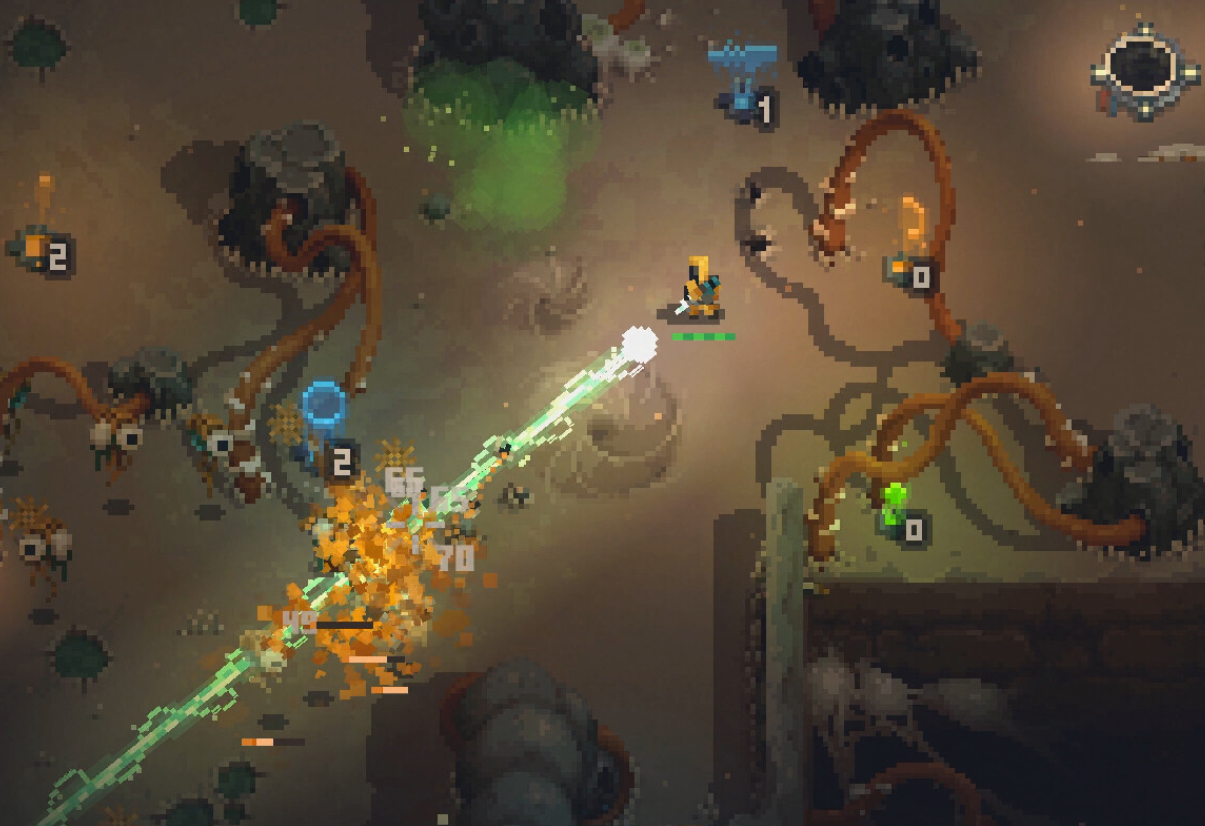
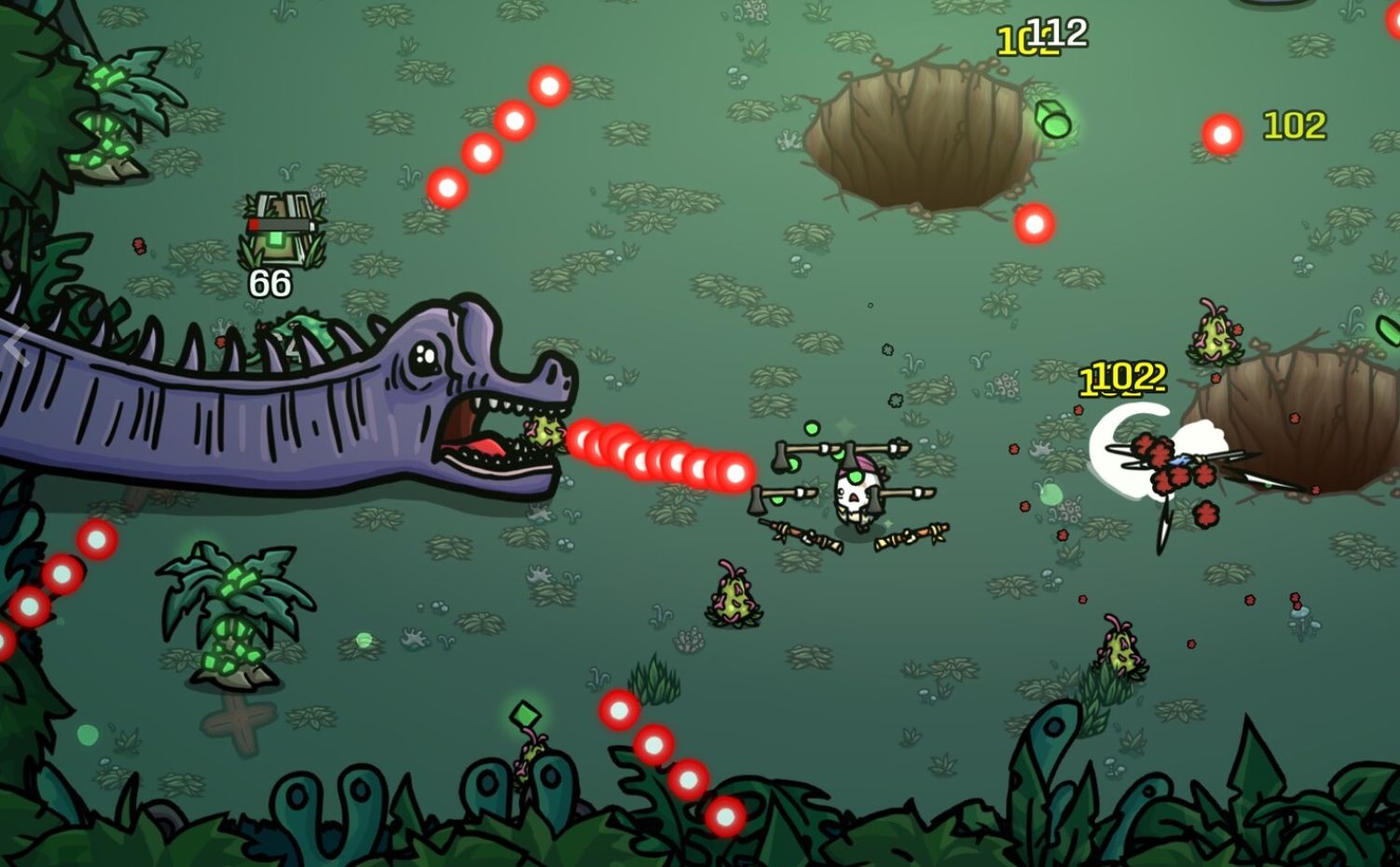
Terrorformer TD is a new tower defense roguelite by indie developer onewinter games. The full and finished game is due out in September, but a new demo has just dropped in time for Steam Next Fest.
Ahead of playing the new demo, I was invited to put some questions to its creator-in-chief, TJ Cioffe, who is making the game as part of his MFA studies. Below is the interview in full, along with a handful of screenshots. I may be biased, but I think it’s a really interesting read, especially if you’ve ever dreamed of studying game design.
Before you dig into that, and get all the details about the game and an explanation of how everything works, I just wanted to note one or two things. While it may be one of the more visually complicated games you’ll see during Steam Next Fest, I actually found it really easy to get to grips with and everything felt surprisingly intuitive, so don’t be put off by directness of its interface.
My first run was an absolute mess, I don’t mind admitting, but once I worked out how everything worked and what was expected of me, the scope of the game came into focus and I started having fun. As TJ reveals, there are several moving parts to consider, with turrets to place, pathways to forge, and a healthy selection of upgrades to pick from as you look to optimise and improve.
Not only that, but there’s a bunch of new features that have been added for this demo, so make sure to take a look over on Steam if this sounds like your cup of tea, as any feedback received will be most useful. Anyway, that’s enough from me; things are about to get much more interesting…

RL: For the uninitiated, what is Terrorformer TD?
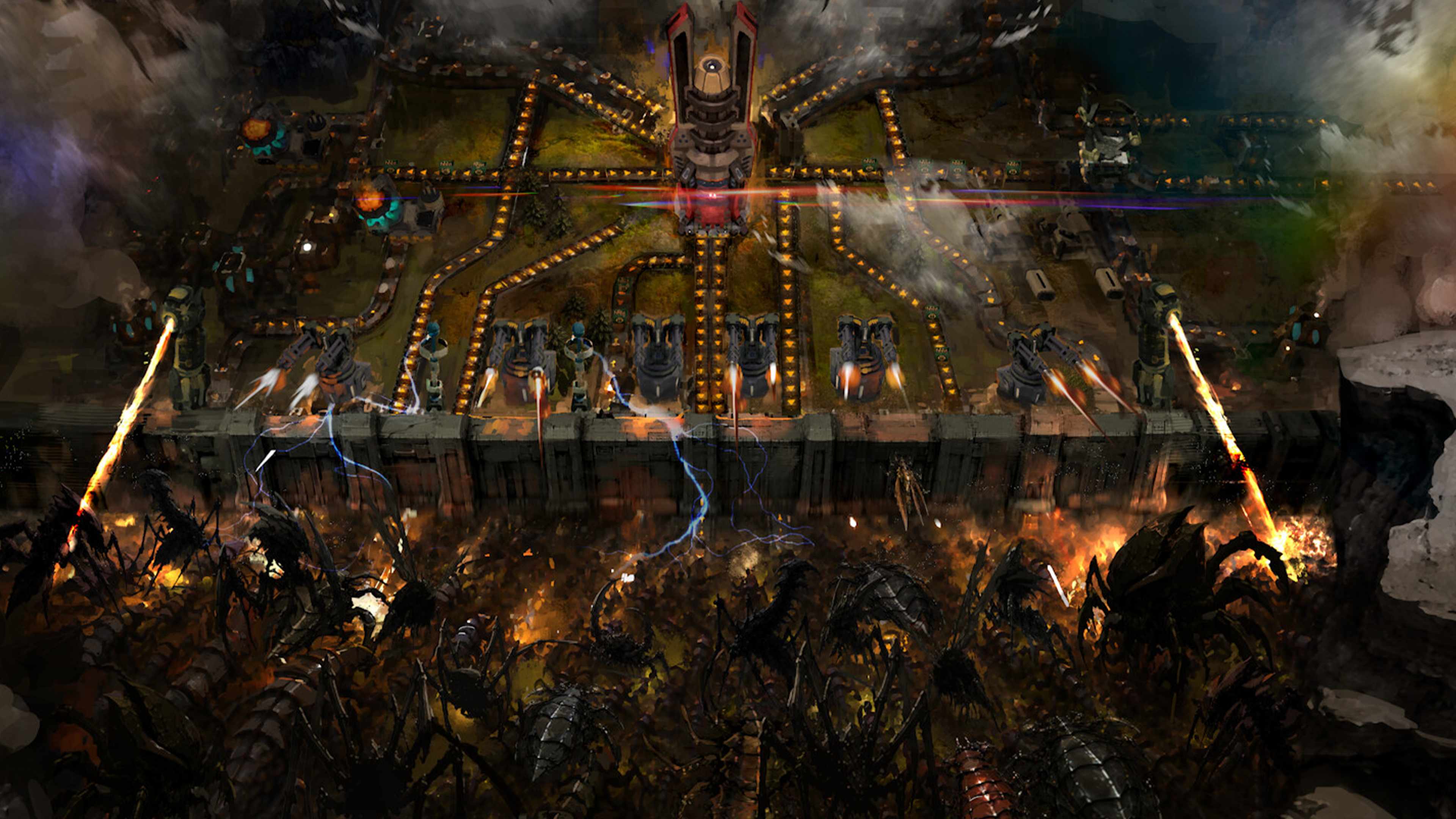
TJ: Terrorformer TD is a tower defense roguelite where the map erodes and grows as the game progresses — but the player gets terraforming tools to shape it! Every round, the player fortifies their defenses to survive against waves of enemies; then cashes in at the shop for new towers, upgrades, and other rewards. Players gain XP and level up to unlock new abilities and components after each run, growing stronger the longer they play.
You’ve put out a demo for the newest Steam Next Fest – what have you included in that and what are your hopes for the event?
The Next Fest demo includes an additional 12 enemies, moving the final boss of the game out to round 75! In addition, two of the three existing maps have been reworked to further differentiate their art and gameplay styles; with two further maps added to bring the game’s total to five (four unlockable). Thanks to some dedicated playtesters, I’ve also been able to add some mid-to-late game optimizations to cope with the massive numbers of towers I’ve seen them place!
For Next Fest, I’m looking to build on the game’s momentum so far and continue to find passionate fans to help me mold this game into the best tower defense experience I can create. We’ve got Steam Tower Defense Fest coming up later in the summer, so it’d be fantastic to have folks excited about and looking forward to the next batch of new changes that will bring to the game.

You’re making this game as part of your Master of Fine Arts degree – can you tell us a little bit about your journey so far?
Absolutely! Like many of us, the lows of COVID provided me the opportunity to take stock of my life, and think hard about what I valued, what made me happy, etc. I’d been doing some form of IT work since I was a kid (I helped my dad wire the home office with 10Base2 coax Ethernet when I was like 9), and I realized it was finally time to do something a little different. In 2016, I made a riff on the 2048 puzzle game called Odds & Evens, leveraging my knowledge of C# from web & application development to learn Unity and publish it on the Apple and Android app stores. It probably sold a few dozen copies, so eventually I moved on to other things, but when reflecting during COVID, I realized the work made me the happiest of anything I’d done in my career.
I started on my Masters of Art online at the Academy of Art University in June 2021; within a year, I realized that I was definitely in the right place and switched to the MFA track, which would require a thesis project and more classes, but would allow me to eventually teach the subject myself in the future. I chose tower defense for my thesis project to scratch a long-running itch; I’ve been wanting to make a tower defense game since they were around as Warcraft and Starcraft maps (somewhere I have the 15+ year old excel planning file to prove it). In addition, the genre seemed like a reasonable choice for my background in software & systems architecture — and something that I could keep from getting too out of scope!

What is the hardest thing about making a video game, in your opinion?
If you had asked me this at the beginning of my grad school career, I would have probably said the programming. And while programming is still critical, the point of a game is to evoke an emotion of some sort in the player (usually fun). Taking a concept and finding the fun in it as a developer is probably the hardest part — if you can’t nail that, it doesn’t matter how pretty or well optimized your game is. The show Mythic Quest nailed this in their third season, when Poppy (who I understand on a spiritual level) creates a technically perfect, but soulless game. Over time, she has to accept that some janky prototype she made on a whim is resonating with players much more strongly than her technical game, and that her energy and focus should be on that! At the end of the day, games are still art — they can’t come from a purely cerebral place.
What is it about roguelike mechanics that makes them a favourite of game designers (and you, I’m guessing)?
Indie developers in particular love roguelike mechanics because they enable us to punch above our weight class and create relatively deep, replayable games without having to handcraft each gameplay element. One of the great happy accidents of game development is the phenomenon of emergent design: when players combine two or more gameplay mechanics in a way that you, as the developer, did not envision or intend, leading to a gameplay experience for the player that is greater than the sum of its parts. Roguelikes, with their focus on classes/builds/perks (depending on the game’s application of the genre), are perfect playgrounds for players to experiment with combining these elements, increasing the game’s replayability and utility.

How have you utilised roguish game design in Terrorformer TD?
I was directly inspired by the game Rogue Tower when creating Terrorformer TD, so the game follows a similar structure: you draw cards after each round to unlock new towers and upgrades. However, while Rogue Tower simply deals you a combined set of upgrade and unlock cards after each round, Terrorformer TD has a full shop available — allowing you to purchase as many cards as you can afford. You can also exchange currencies and purchase extra health.
Outside of each run, you will also earn XP based on the rounds you survive and enemies you defeat. As you level up, you will unlock new starting towers, spells, stat bonuses, and even perks like increasing the number of cards drawn or the maximum game speed! Roguish classes are implemented by allowing the player to customize the three different components (base, targeting, and weapon) of their Home Tower. Home Towers can be fitted to fire projectiles such as rockets, ice missiles, or chain lightning and will level up and grow stronger of the course of a run just like the player’s built towers.

Finally, as you’ve explained, Terrorformer TD is a tower defense. I’ve noticed a few games combining these mechanics in recent months. What do you think of the recent rise of the roguish tower defence niche?
There are a lot of points in TD games’ favor for indie developers: they’re mainly point-and-click, players don’t expect flashy graphics, you don’t really need physics, etc. They lend themselves to procedural generation, which makes them a natural fit for roguish mechanics; and they have a solid middle game loop (each run), which keeps the player coming back for one more try. These are all strong selling points for small developers!
I don’t know if the other developers in this niche were inspired by Rogue Tower like I was, but I’m glad we all agree that roguish tower defense is a genre worth exploring! I think it’s fantastic to see the tower defense genre find a new gear in 2024, and I look forward to learning from and being inspired by all the other great new entries in the genre. Who knows, maybe we’ll come together to create a roguish tower defense bundle so players can try them all…
Thanks for the questions and for the interest in Terrorformer TD!
You are most welcome, and thank you for taking the time to answer my questions about Terrorformer TD!