It was a pleasant surprise to see poncle follow the monumental success of Vampire Survivors with a spin-off rather than a straightforward sequel. With the market now being flooded with Survivors-likes, sticking to the formula might have been the obvious choice, but the less interesting one.
The original Vampire Survivors helped spawn an entire sub-genre of its own, one that has remained hugely popular since its release. Instead of simply iterating on that formula, poncle chose to play a wild card, adapting its signature gameplay to fit the structure of a deckbuilder mixed with a blobber – an old school first-person RPG.
The result is an addictive and enjoyable accompaniment to the original that I can see becoming a real time sink for me and many others in future.

What is Vampire Crawlers?
Vampire Crawlers is the first in what will hopefully be a series of spin-offs for Vampire Survivors. While the original game began as a small-scale indie project that grew into a breakout hit, Crawlers sees poncle collaborating with Arcade Paradise developer Nosebleed Interactive to help expand and refine its presentation and scope.
If you’ve played the original Vampire Survivors, Crawlers will act as a fun trip down memory lane viewed from a new perspective, with it featuring familiar areas, characters, enemies, and weapons in the form of cards. It strikes that perfect blend of being completely accessible to newcomers, but including enough Easter eggs and references to keep returning fans engaged.
Instead of scaling giant maps and taking down waves of enemies by selecting abilities, you instead face them in turn-based card battles. Each turn you’re dealt a handful of cards, which have their own mana cost and colour-coded effect. Red cards inflict damage, blue cards provide armour, green cards are character-specific abilities, and yellow cards offer a range of helpful buffs.

The cards you’re dealt
Success depends on playing a balanced mix of card types, using offensive options to chip away at advancing hordes while maintaining enough armour to withstand incoming attacks. You can also generate combos by playing cards in mana-cost order, forcing you to pause and think about sequencing rather than simply spamming the most powerful options.
Like many other deckbuilders, careful management is essential, with players gradually unlocking a varied selection of cards that can synergise effectively. Each time you level up, you’re presented with a choice of three cards, and selecting wisely is crucial, as leaning too heavily toward offence or defence can prove fatal. You can also evolve certain cards into far more powerful versions, provided you have the required components, another strategic consideration that rewards planning ahead.
You can also infuse your cards with gems by defeating bosses or discovering chests scattered throughout each level. These enhancements grant secondary effects, such as increasing your Might stat, allowing cards to be played without a mana cost, or returning them to your hand after use. You only have limited gem slots per card, so wise deployment is vital to combat the scaling difficulty.

The long road ahead
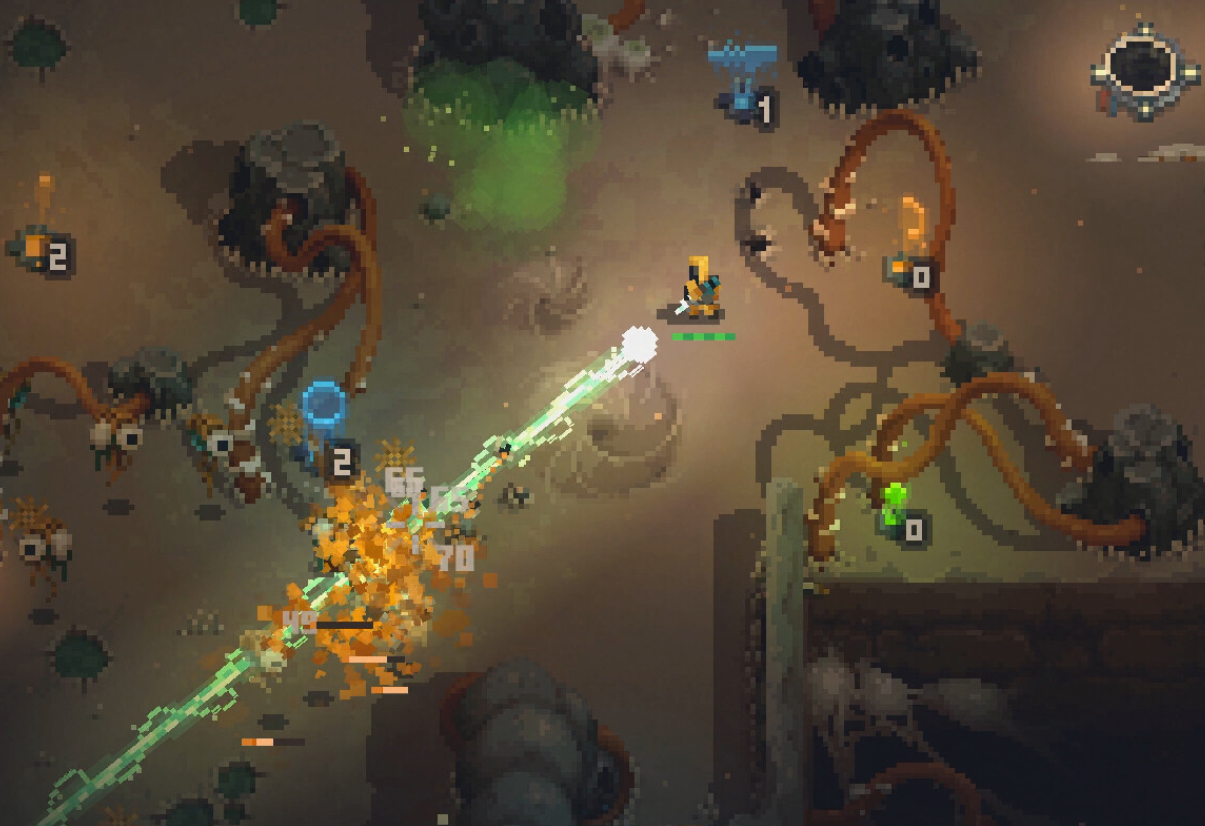
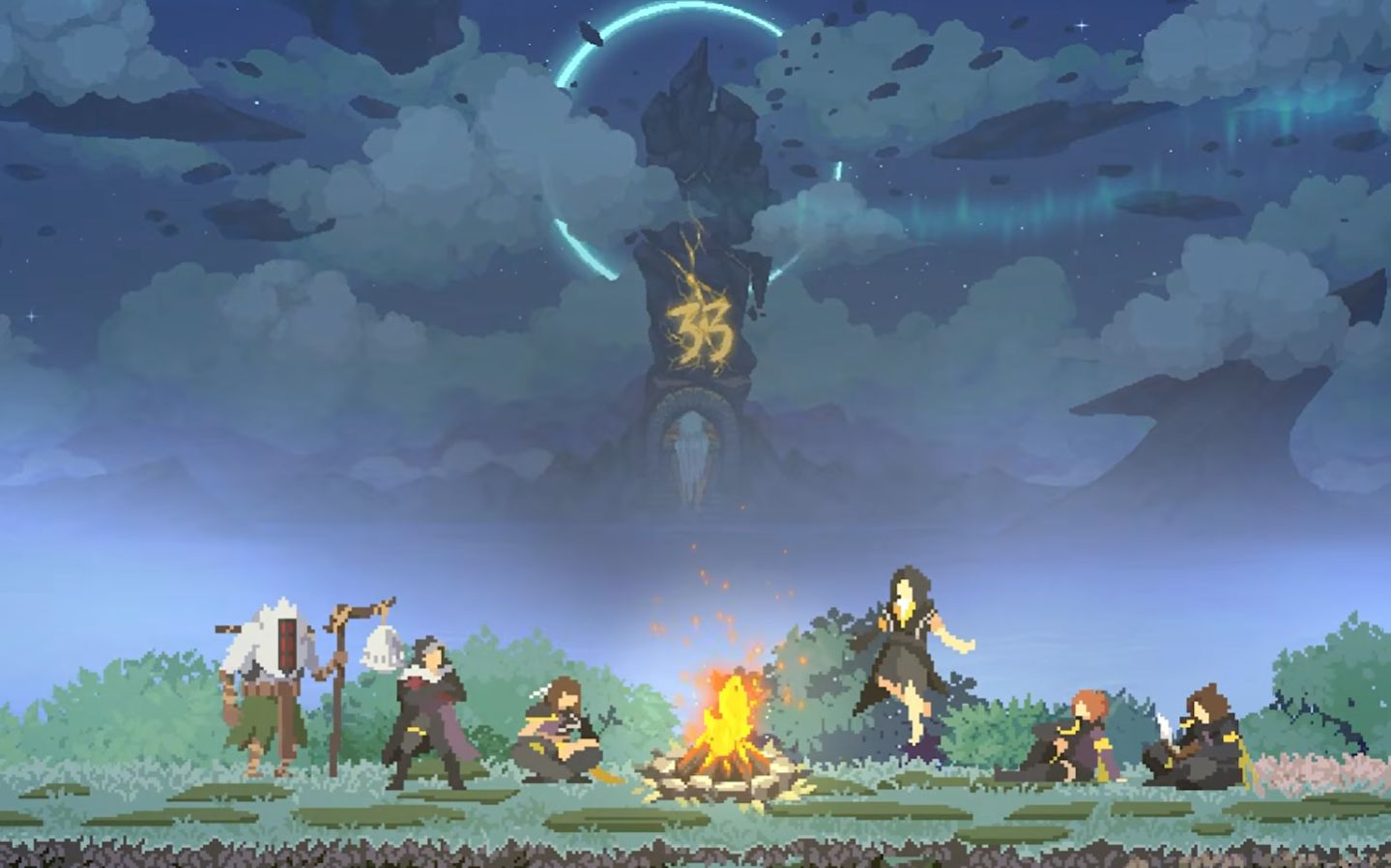
Traversal takes place across a 2D map similar to the one above, brought to life with gorgeous pixel art that’s strongly reminiscent of early ’90s PC games. Across the game’s many biomes, you’ll move from encounter to encounter, levelling up your character, strengthening you deck and uncovering chests and other hidden goodies.
To clear a level, you need to progress through five different floors and challenge a boss or more powerful enemy at the end of each. There’s great incentive to take your time and explore, as you could possibly uncover card upgrades, health pickups, and stat modifiers.
My main complaint about these sections is that it can feel a little tedious navigating the map, as you repeat the same core actions each floor you visit. Towards later stretches of runs too, it can feel a little grindy to battle each group of enemies to receive the XP you need to level up. Repeating these encounters feels like a necessity as you’ll want to feel as prepared as possible when taking down the final boss.

A thirst for progress
I actually found the pacing of Vampire Crawlers to be faster and more consistent than its predecessor. Each run introduces a steady stream of unlocks, and I consistently felt rewarded with new tools to experiment with. Progression is handled particularly well, starting you with the basics before gradually expanding your pool of cards, characters, and abilities in a way that feels natural and well-paced for its mechanics.
Outside of runs, you’ll still need to permanently upgrade your stats with your gathered gold and unlock new characters, but the run-to-run progressions just has a much smoother flow. In Vampire Survivors that grind to reach level 20 and unlock the first new biome felt much more drawn out and I’m sure newcomers will appreciate the change.

The Verdict
While I have a few minor issues with the game’s traversal, it remains a fun, accessible deckbuilding spin-off that captures much of the original’s addictive appeal.
The team at poncle have succeeded in seamlessly shifting Vampire Survivors into another sub-genre showcasing the strength of its source material. I found Crawlers to be well-paced with its unlocks and it was always fun to see how I could strengthen my deck with crazy combos.
With poncle already confirming post-launch support and additional content planned, it will be interesting to see how the game evolves over time. I’d also love to see the developers experiment further, because shows that they can mix it up.
Vampire Crawlers is out April 21st on PC, PlayStation, Switch and Xbox, and I played on Switch via access kindly provided by the publisher and friends.