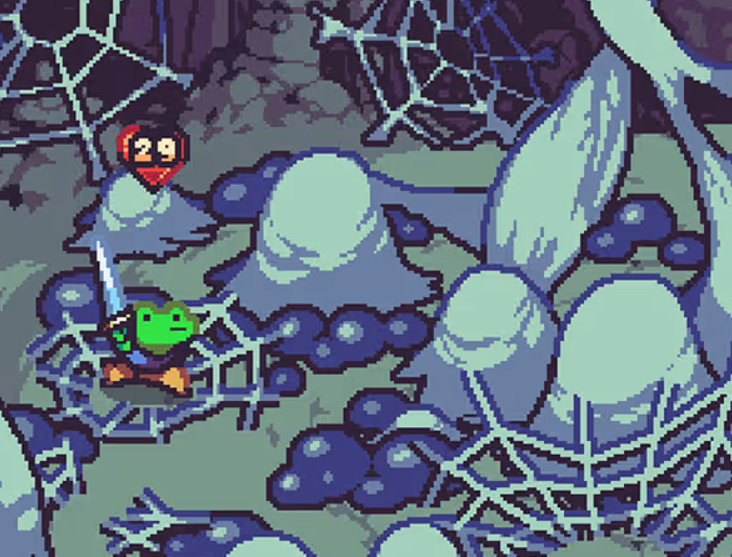
I’ve got both eyes firmly fixed on Vellum; even more so after having played the game myself. There’s a public demo of this third-person action-roguelite ahead of Steam Next Fest on February 5th, and the demo is available to download right now over on Valve’s platform.
In the meantime, while it downloads, you’re going to have to content yourselves with this interview between myself and Jonathan Schenker from independent studio Alvios Games.
Written Q&As don’t often come out this good, but in this case every answer has something interesting in it, including some surprising gameplay influences (including one or two of my favourite games, games that I did not expect to be referenced).
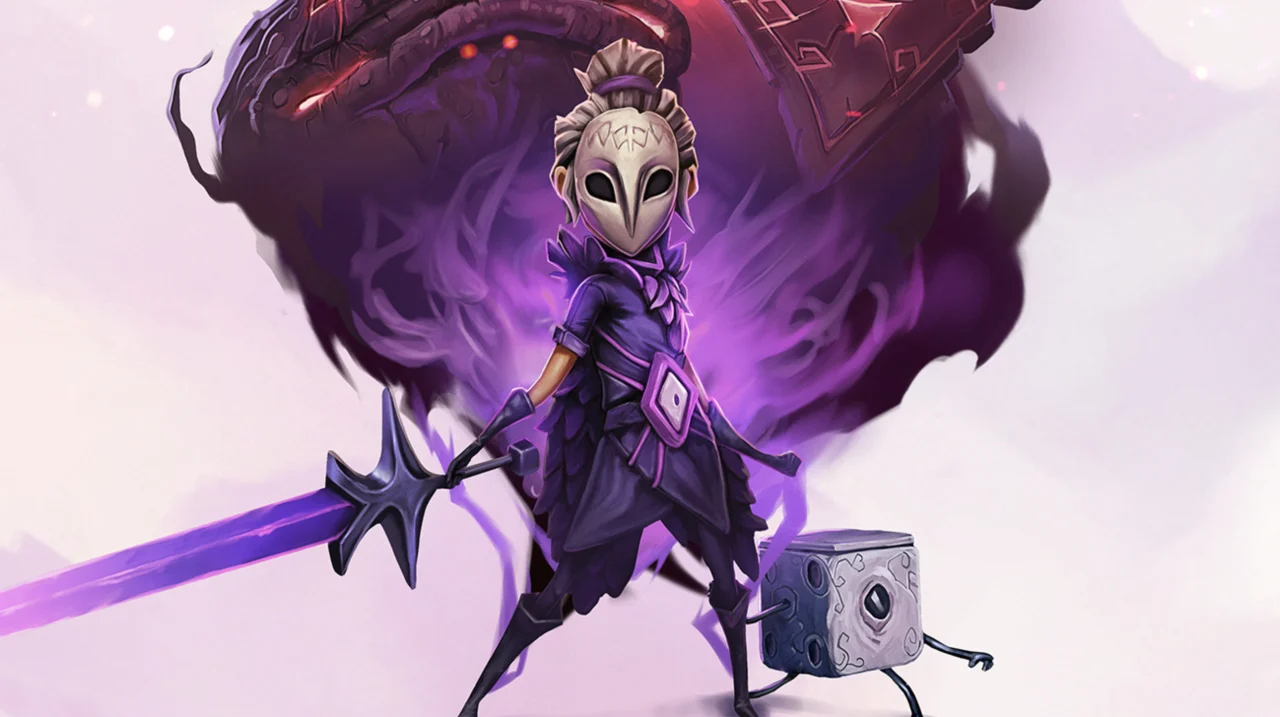
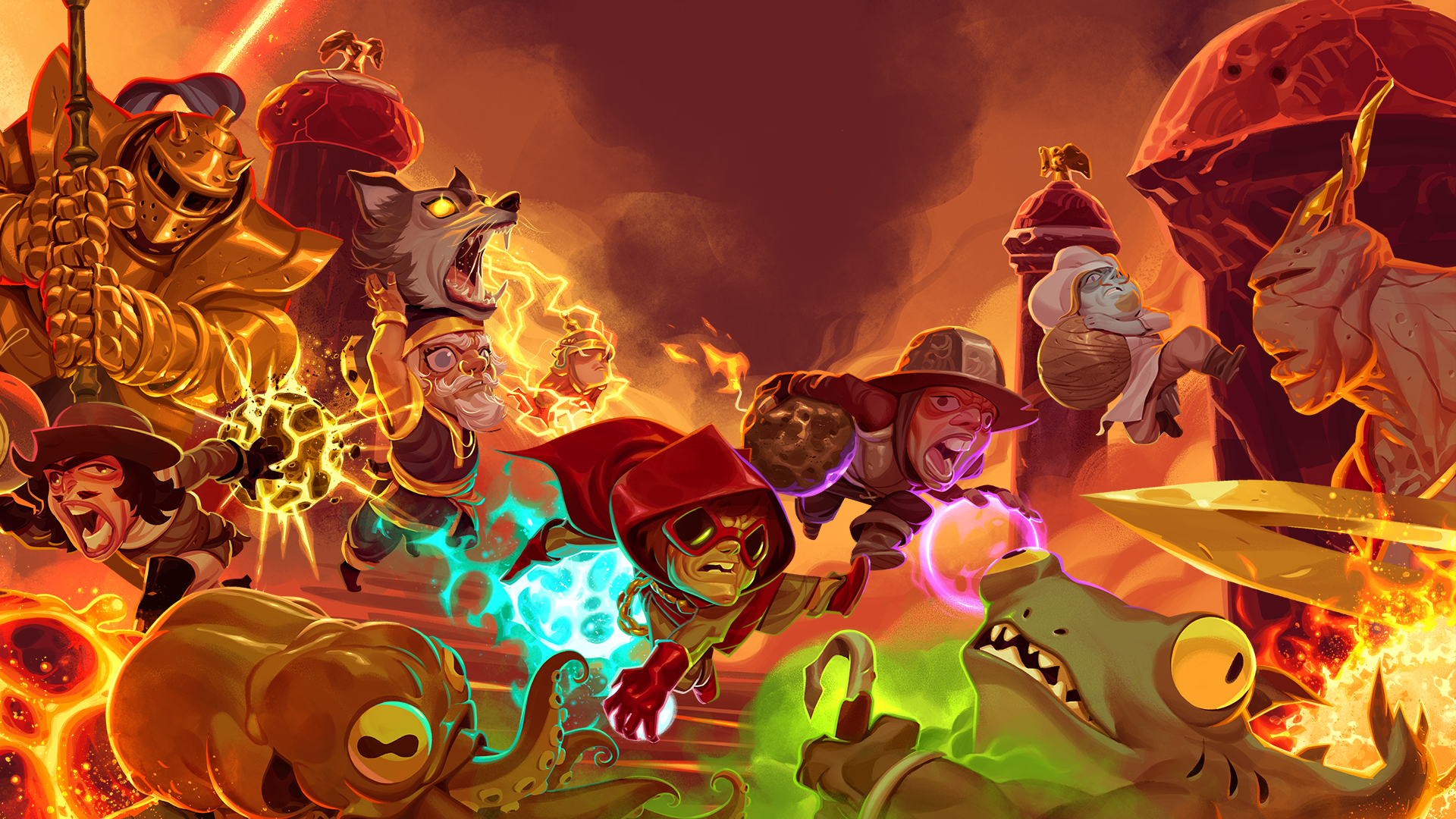
The developers were also kind enough to include some cool imagery for the article. So, if you want to get more insight into this exciting new magic-infused co-op focused roguelite ahead of the demo and its Early Access release on PC Steam, read on.
Hi Jonathan, thanks for taking the time to answer a few of my questions. It’s not very imaginative but my first question in these sorts of interviews is always to ask for the elevator pitch. What is Vellum, in a nutshell?
Vellum is the co-op roguelike we’ve wanted to play for years. It has a serious focus on making unique and interesting player builds that get tested in different ways – playing a mental tug-of-war with the enemies that you have to evolve.
I’ve already seen a few comparisons between your game and Risk of Rain 2, but after playing the demo I think that’s a bit reductive as they’re very different games. Can you tell us about the games in the roguish space that have inspired you and how those inspirations have informed the game that you’re making?
Absolutely, we’re big fans of the roguelike genre, and our learnings from many different games went into the current feature-set of Vellum. We’re really into Hades and Gunfire Reborn (and Ziggurat and Crab Champions and Risk of Rain 2 and Ember Knights and…) which have influenced our approach regarding many of the roguelike staples (upgrades, map design, meta-progression, ability ideas, etc.)
We’ve also been heavily inspired by some non-roguelike games, particularly for the cooperative multiplayer aspects of the game – Halo 3: ODST Firefight and Mass Effect 3 Multiplayer were big inspirations for the combat pacing, and feel of enemy aggression in a cooperative setting.
I like the mechanic that lets you pick the new abilities that your enemies have for a coming round. Please spill the beans on how that idea came to be and tell us your favourite enemy attacks.
This was one of the features that existed since the very beginning of development. Bullet sponge/health scaling alone asks players the same question over and over, and with so much build variety in a roguelike, that seems to leave a lot on the table. So we tried to come up with a system that let you lean into your build and boldly choose your own challenges.
If you think you can handle a huge enemy damage bonus because you have a defensive build, that’s fair game – if you think you can overcome some extra defense because you got some massive damage bonuses, prove it!

My favorite enemy upgrade is Singularity which gives the Raving enemies an on-death effect, dropping a wormhole that pulls you toward it. I usually pick any speed-boosting upgrade I find, so I always think I can outrun the pull, and often get humbled!
What can you tell me about the enemy designs in the game? There seems to be a strong focus on wildlife as well as the monochromatic spellcasters I encountered. How do these enemies connect to the narrative?
The players (Scribes) draw their power from colorful Inks, which is contrasted by the monochromatic enemy force, the Torn. They represent the decay of the library’s tomes that we jump into. Are they a natural force or nefarious corruption? That remains to be seen…
There are three Torn families – Splices (like comma splices) are up and personal brawlers, Tangents are the ranged spellcasters, and Ravings are the disruptive rampaging beasts. Splices test your manoeuvrability in tight spaces, Tangents make you prove your map control as you weave between cover, and Ravings complicate things by trying to interrupt your intent (slow, knockback, silence, etc.).

I encountered a couple of different boss battles, and while they were impressive to behold, we knocked them over pretty quickly and I’m very much assuming you’ll be looking to rebalance things on that front as you gather more feedback from players. Tell us about the ongoing process of difficulty balancing in a genre that’s synonymous with challenging gameplay.
That’s a great note and something we have discussed frequently. We’ll absolutely be keeping track of how players are faring against the various Tomes, and balancing things accordingly.
The devs of Slay the Spire gave an awesome GDC talk a few years ago about the balancing and tooling strategies they use. We have set up a lot of similar infrastructure. Every game completed (win or loss) gets saved so we can take a look at aggregate player/enemy picks, where players take damage and from what, how long people take on bosses, etc.
During Early Access we want to be pretty open about making big changes to the balancing. One nice thing is that we don’t need to just buff boss health to make them last longer. The enemy picks you make along the way apply to bosses too, so we can give you tougher defensive choices for the enemies earlier in the game and that will effectively buff the bosses as well. We definitely have a ton of knobs to turn to hit our desired metrics.

One thing that isn’t in the Demo, but will be in for Early Access, is the Bindings system (our version of the ‘heat’ mechanic popularized by Hades). In Vellum, however, it won’t be an endgame system; it’s an intentional part of the progression. Our target win-rate for early-game runs is pretty high. We want you to beat those first few Tomes, feel like a badass, and then add wild modifiers that change how you play, upping the stakes. Now the floor is lava, that invisible snail hunts you, strong winds howl across the map, and now every single choice has brand new context.
How does the progression element work? I already bought myself a cosmetic item in the shop, but how else will players see their experience reflected in the game?
We do veer closer to roguelike territory, but primarily player power expansion comes from unlocking new pages that can appear in runs and unlocking new abilities that you can mix and match to create your own loadout.
Part of progressing through Vellum is unlocking more Tomes. The Demo currently has 2 of the initial 10 planned Tomes for Early Access Launch – where each Tome’s unique mechanics (Tortoise and Hare‘s moving/not moving buff) will influence future unlocks. In one of the upcoming Tomes, The Wolves, two wolf companions join you that can be upgraded through Font Powers over the course of a run – and beating it unlocks upgrade pages that can summon them briefly in other Tomes!

There will be a lot of content in the Tomes and Binding progression, with some bosses and enemies only showing up in certain Tomes or after certain Binding Level thresholds.
Then there’s also the ability unlocking! There are 2 Signature Inks and 4 abilities in the demo. For Early Access release we’re targeting 4 Signature Inks and 8 Abilities, each with their own set of upgrade pages, and we’re keen on expanding that list on the road to 1.0 launch.

A big part of a game like this is the procedural generation – whether that be item placement or even terrain changes – and how that impacts things. How are you making sure that Vellum feels fresh for every new run?
In addition to the randomization of player/enemy upgrades, and bonus objectives, there are a few additional dynamic aspects to gameplay that should help keep runs fresh.
We want enemies to act as an active part of getting your build online, so while we have an expansive roster (only a handful of which are in the demo), you’ll see a small, intimate subset each run. This lets you get to know them and how they combo as you progress through a Tome; and their context changes as you add features to them, with each run having a totally different enemy set to strategize around.
For maps, we have only a single (Forest) biome in the Demo, with two more ready for Early Access launch and more to come. We’ve taken an approach of smaller, static levels that change frequently instead of large, procedurally generated maps. We’re also looking into adding more random ‘items of interest’ on maps as well as expanding the list of Font powers that alter how maps play.

What can you tell me about your philosophy toward upgrades, both for the player and the enemies you encounter.
For player upgrades, one of our guiding principals has been ‘be more exciting than just 25% damage’ – We want every upgrade to have a chance to capture imagination or lead to a discovery. Everything should be able to be the perfect pick for some build. A 2% damage boost doesn’t quite invite that excitement in the same way. If you find something completely uninteresting after a bunch of runs, and don’t see where it could possibly be a huge boost to a build, we want to know so we can take it out or rework it!
Similarly for enemies, they need to grow in ways that invite and sometimes demand player creativity. Luckily since you are choosing them, we can offer up options that are difficult, but empower you to meet the challenge. Some games might dangle a reward in front of difficult picks like these, but we decided to not get in the way of setting up and overcoming your own challenges.
After the Steam demo, the game is going to hit Early Access in March. Can you quickly tell us what your focus is going to be over the next few weeks and months?
We plan on taking in a ton of feedback during Next Fest to help our prioritization, but I suspect most work will be focused on content expansion. For example, we have unique abilities and upgrades (like Hades Daedalus Hammers) and are looking forward to seeing which directions capture the community’s imagination.
We’re also planning on fleshing out two more Signature Ink colors ahead of Early Access: Red and Green. Red will be our first defensive-focused color, adding the ability to tether to nearby enemies and leech health from them. Green will be our summoning ink, where your abilities will summon allies and upgrades will be focused on evolving them.
Finally, you’ve confirmed that there are plans to bring the game to consoles, even if nothing is concrete just yet. Is there anything that you can tell us about your cross-platform plans?
Absolutely – we have experience with multiplatform development on our previous title (Marble It Up!) which we brought to Switch, Xbox, and PlayStation with full cross-play multiplayer support. We’ll be keeping an eye on Xbox and PlayStation audiences, but we think the best experience for Nintendo fans might be in the hands of a future console rather than a current generation one.
The main reason we’re currently focusing on Steam exclusively is because we want to be able to iterate without roadblocks in Early Access – Steam lets us push updates in (not exaggerating here) under 10 minutes, while consoles have a multi-week, even month-long review process for even the smallest bug fixes. Steam’s flexibility lets us hit feedback quickly and have a more dynamic relationship with our players.
That being said, all of the ongoing work is being done with future console requirements in mind, so we do expect to be able to get Vellum into the hands of console players in a great state when the time comes!
Thank you so much for taking the time to answer my questions. I look forward to seeing more of the game in March. For more on the game’s release plans, hit the link.