“Speed. I am speed,” a talking car once said. As I start hopping between platforms like an anthropomorphic bolt of lightning, spinning in and out of whirlwind style attacks and darting around my opponents like an olympic sprinter, I feel like speed personified.
Windblown’s dash-heavy design drives the action forward in more ways than one, and after several hours with Motion Twin’s new co-op action-RPG, I’m keen to see more of the wonderful world that the Dead Cells creator has built for its sophomore effort.

What is Windblown?
At its heart, Windblown is a fantasy action-RPG about a world being ripped apart and sucked into a spinning vortex filled with stone machines that attack on sight. Your job, naturally, is to stop this from happening, and you do this by looting biomes for powerful weapons and trinkets, and then using them to defeat your enemies.
The influence of Dead Cells is there, for sure, but Windblown is very much its own game when compared to the studio’s debut release. Gone is the side-scrolling roguevania structure of old and in its place we have an interconnected assault course to traverse. This world is made up of tiny floating islands and Motion Twin has arranged them in such a way that you can hop and skip between them as you explore.
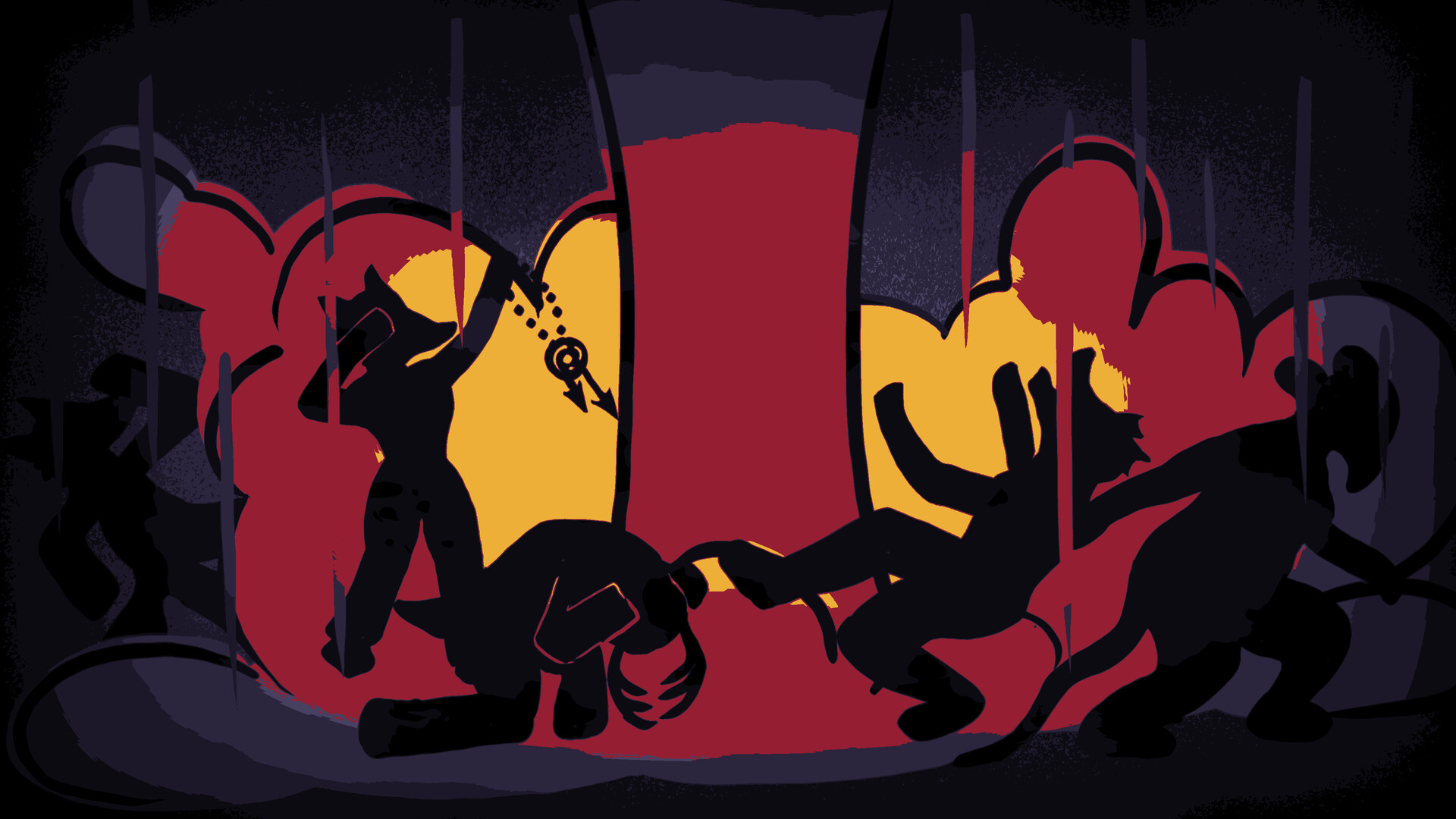
When I say “you,” I mean the anthropomorphic animals that you and up to two of your friends control. I’ve spent most of my time playing solo as a teeny wee bat, but there are several characters to choose from and it doesn’t seem to make any real discernable difference when switching them out. I will say that the character designs are really sweet, though.

Windblown over by the audio-visual experience
I have to say, I am extremely impressed by the visual design and its implementation. You can feel the influence of Zelda in terms of aesthetic and also the mechanised stone enemies you ecounter, and that’s lofty praise indeed. The floating world that is your home base – the Ark – and the Vortex that hosts your adventures are both stunningly realised and, with little secret ledges just waiting to be discovered, it’s a joy to explore.
The soundtrack is also top notch. I often have a listen to a game’s OST and then skip back to my own tunes, but the music in Windblown is really good, and complements the mysterious and enigmatic world.
Not only does it look and sound good, but it feels good to play, too. The controls are responsive and snappy, and it didn’t take me long to find a groove. I was reminded a little of Hades at times, as I darted around my enemies looking to backstab them into oblivion; another favourable comparison. Windblown is a bit faster-paced than Hades, certainly, but the frantic edge-of-your-seat combat encounters from Supergiant’s masterpiece are replicated here, too.
One aspect that separates Windblown from its contemporaries is the joined-up world design. There are five biomes in the game at launch, with more due to land during early access, and each one is collection of different map sections that can be stitched together in a number of ways. It’s not always as open as it appears, but the procedural generation was pretty good in my experience, with each new run feeling just different enough to stay fresh.

Fast-paced fisticuffs
The combat sits at the core of the Windblown experience. Regardless of which feisty little critter you select, you’ll be using two different weapons during each run. The first is a standard Fish Knife, and the second is handed to you at random at the start of the run, along with any other trinkets you’ve unlocked. Ideally you’ll get a ranged weapon to complement your melee option, but it doesn’t always work out that way.
You can, however, swap out your weapons for new ones that you find during play. Like I said, the best combo is a melee weapon (ideally one better than the Fish Knife) and a crossbow, or similar. That means you can keep your enemies at bay during combat, but when it’s time to get close and personal, you can dish out good damage too.
On top of the weapons, there are trinkets mapped to the shoulder buttons. You can carry two at a time, and they’re usually area-of-effect attacks of some kind. I liked freezing my enemies in place and then skirting around them for a good ol’ flank attack, or selecting the spin attack and then racing around like the Tasmanian Devil.

Furthermore, there are various passive benefits that you can unlock and then use during future runs. For example, you might have more powerful backstab attacks, or you could shorten the cooldown timers on your trinkets. These systems are maintained back at the Ark, via the characters you find and rescue during play.
The meta-progression is probably the least remarkable part of Windblown, and you can feel the influence of other top-tier roguelites in the way that everything has been put together. This isn’t a complaint, though, and I thought everything made sense and was quite accessible.
There’s obviously a lot more to come, including a planned change to the controversial sudden death co-op mechanic, which has caused some consternation amongst the game’s fledgling community. Simply put, if one of your co-op players goes down and you don’t save them, then the rest of the team is extremely vulnerable. I can absolutely see why Motion Twin took the decision to implement sudden death, but I also appreciate that it can be a bitter pill to swallow, especially if you’re good at the game and you’re playing with someone who doesn’t have the same level of hand-eye coordination – like me.
To conclude, I’ll end by stating my cautious optimism that Windblown is shaping up to be a worthy successor to Dead Cells. Time will ultimately tell, but as it currently stands, what’s in the box is already highly playable and despite one or two missteps here and there, I’ve enjoyed my time running through the floating world that Motion Twin has delivered.
Windblown is out now on Steam PC (Win) and I played the game via access kindly provided by the developers and their PR buds.