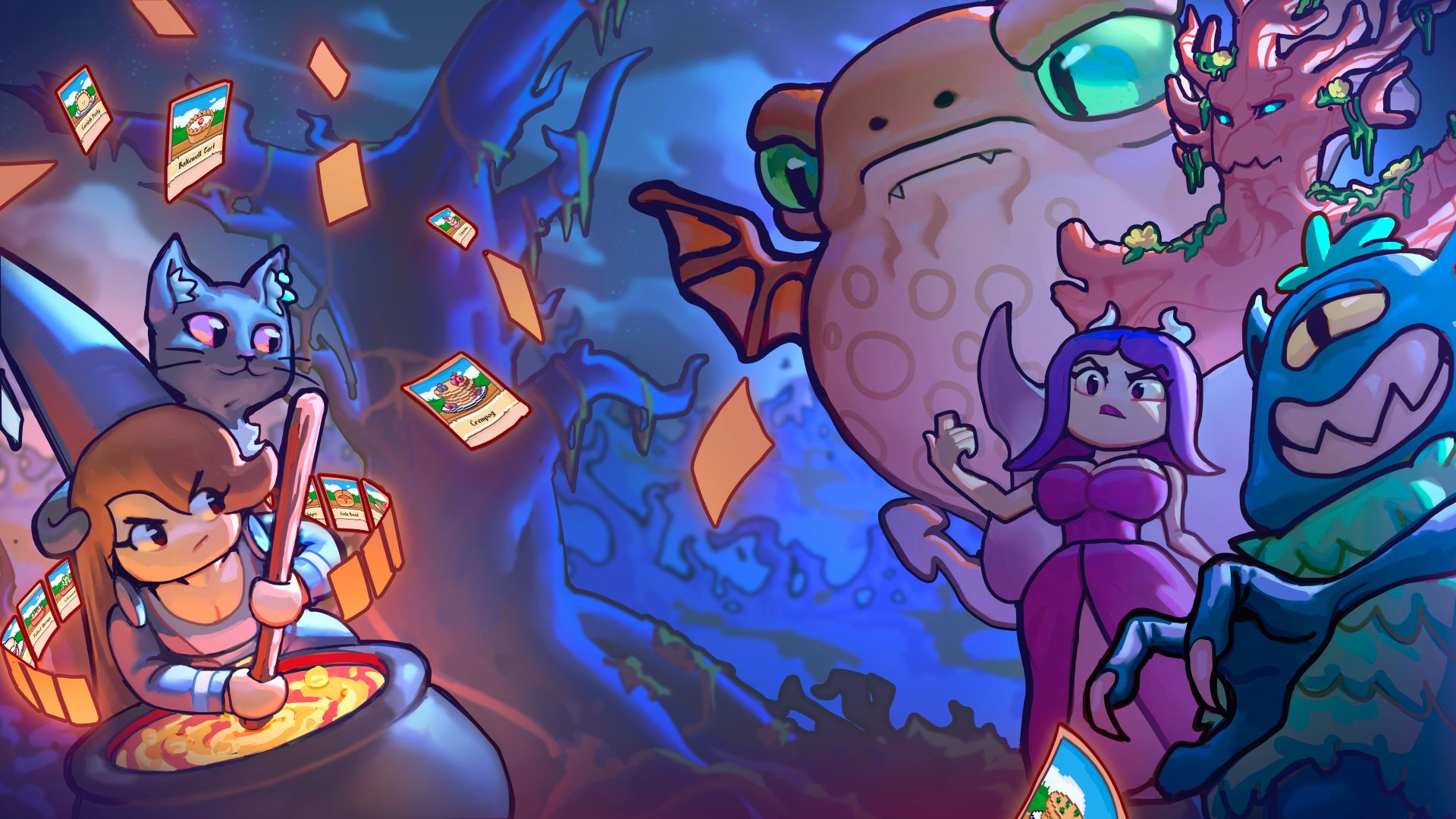
When it comes to interesting propositions, the Force is strong with this one. Decktamer is a roguelike deckbuilder that takes elements from the likes of Magic the Gathering and Pokémon TCG and mixes them up with a few roguish features to create a distinctive, eye-catching fantasy card game.
The influences are clear to see, and it doesn’t take long before you’re experimenting with your various cards as you look to not only defeat the monsters you encounter on your journey, but tame and recruit them to your party. You gotta catch – or kill – ’em all, as they say.

What is Decktamer, then?
On top of being a potentially painful typo just waiting to happen, Decktamer is a game about taking cute monsters and turning them into dangerous beasts over the course of a run into the Abyss.
It’s a bit like Pokémon in the sense that you get to pick a nice starting creature that wouldn’t be out of place in a kid’s game. You then get to pick a support group, which is made up of several of the same kind of minion. At first I would quite often pick the hell rats because when you play them onto the board, they nearly always get to strike first.
Once you’ve got your starting party, you then head out on a quest into the Abyss, which means fighting parties of other monsters in exchange for resources. These battles aren’t simple slug-fests, as your resources are all focused on a mixture of dealing damage and also recruiting and optimising the creatures you encounter.

Infused deckbuilding
I thought the most interesting part of the game was the way you can recruit and then adapt your party of creatures. There are several choose-your-own-adventure style encounters where you get additional chances to enhance, upgrade and mutate your hand of monsters.
Not only can you tame monsters using bait, once they’ve been weakened in combat, but you can also steal the traits from one and give it another via these ominous-looking syringes. This effectively encourages you to constantly cannibalise your own collection of monsters one way or another, and I found I struggled when I wasn’t constantly evolving my group by hook or by crook.
This creates a really interesting dynamic where you’ll grow attached to certain creatures as they’ll essentially become the embodiment of your progress through that run. Yet it also means that losing a key creature can effectively be the defining moment in that run’s failure. I guess you could call it “high risk, high reward.”

Laned combat
Things start off nice and simple, and you’ve got one-on-one battles, with new monsters filling in when one falls. Then there are two on twos and three vs threes, and the quality of the enemies you’ll encounter ramps up pretty quickly, too. I hit some difficulty spikes in my first couple of hours, but eventually things levelled.
The combat system is fairly straight forward and easy to parse, I thought, but if you do make a silly mistake you can take back a move. That said, when I had my issues they weren’t so much tactical but more often than not because I’d constructed a flawed party, failed to power them up, and they had hit their limit the round before.

The monsters can often work well together, with attacks that cross the lanes and affect all opponents, or with passive buffs to aid your allies, or even weakening effects to your enemies. That said, while they can work in harmony, the tone of your collection of monsters can sometimes feel jarringly disparate, with cute, fluffy creatures fighting horrible, fang-toothed monsters.
Decktamer is an interesting card game that has some really bold ideas about squad building. It’s not the sort of game I gravitate to personally, but I thought that the monster taming and mutation mechanics give it a distinctive feel within the deckbuilder niche. Putting it another way: if you enjoyed Pokémon back in the day and you’re looking for something a bit more grown-up but with a similar spirit, Decktamer is worth a closer look.
Decktamer is out now on PC (Win) and I played the game via access kindly provided by publisher Assemble Entertainment and their PR buds. It’s also worth noting that, at the time of writing, there’s a demo still live, so you can try before you buy.