They’re big, they’re mean, they’re sometimes (but not always) green… When it comes to monsters, Kaiju fans like ’em big, and they like ’em chonky.
If that’s you, Dear Reader, then do we have a monster of an interview for you.
Sound the sirens and evacuate the city because here comes Dream Team Supreme, the upcoming kaiju-centric deckbuilder from New Zealand studio Big Adventure. We caught up with founder Olivier Chrun to chat about games, goals, and giant angry fridges…
RL: For the uninitiated, please start by telling us what kind of game Dream Team Supreme is.
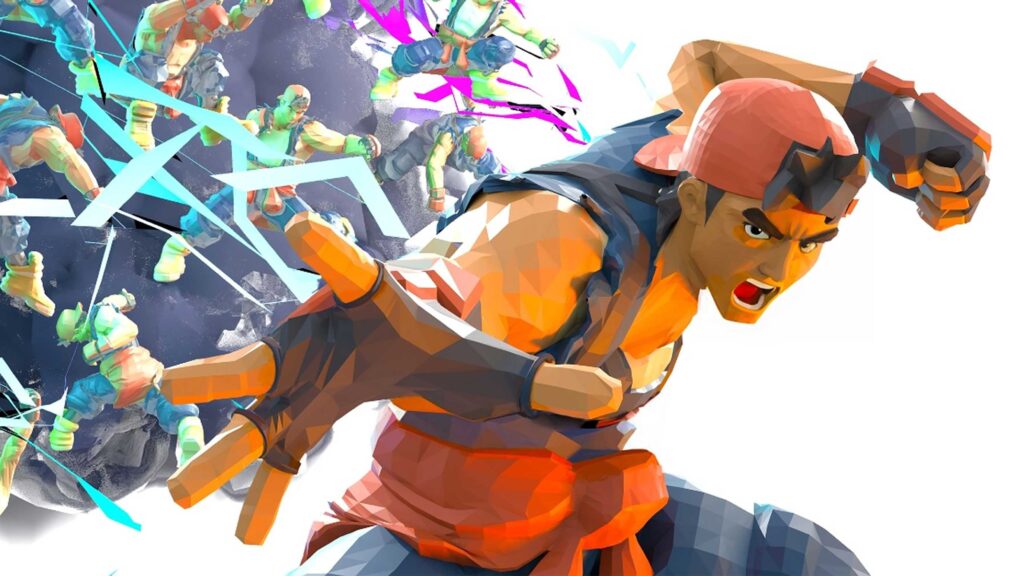
OC: Sure thing! Dream Team Supreme is a roguelike deckbuilder where you and a friend pilot a giant robot and save the world from a monster invasion! You’ve each got a deck of cartridges that you slot into a control panel to pilot your giant robot. Each turn is a puzzle for what to slot in and where to slot it; the order matters as much as the cart you pick. If you’ve ever wondered who’d win between your giant robot and a pirate ship, a rosebush the size of a skyscraper, or a flying kaiju, then Dream Team Supreme is the game for you.

RL: How did you come to the idea – what was the spark that started the project?
OC: We’re massive roguelike deckbuilder fans and love co-op games too. For co-op strategy games, it often felt like the players were playing individually with shared goals. We wanted to make a game that felt like teamwork. We wanted it to feel like the whole was greater than the sum of its parts. So we came up with the idea of two decks playing in the same sequence. That forces communication between partners every turn. In a solo game, the idea forces combining ideas all the time. Building out from there, thematically, a team of scientists piloting a giant robot seemed like the natural next step haha.
RL: There is so much great source material to call on when it comes to the Kaiju theme you’ve adopted. What are some of your inspirations in that area?
OC: You’re right, there are so many that I’ll try not to just start listing things. From Tremors to The Meg, I watch all the monster movies. They are simple fun. All that you need to do as a viewer is accept that something larger than life can exist for 2 hours and you’re in for a good time. Godzilla faced off against another Kaiju every movie. We looked a lot at the Shohei era of tokusatu for visual inspiration. Then TV shows like Power Rangers and Ultraman faced monsters every week. So many of the shows demonstrated teamwork as a key ingredient for the good guys coming up big, so it just seemed like a natural fit.
RL: The idea of fighting monsters styled like everyday items is interesting. What can you tell us about that design choice, its origins, and its implications in terms of gameplay?
OC: Power rangers played that trick many times and we loved it as fans. When you’re young, you’re looking up to just about everything. Seeing my toddler run around the house and hug the refrigerator, it’s easy to see how everyday items can take on a personality of their own and become larger than life. I think because of those things, we never constrained our monster creation to just animals/aliens. Anything can be a monster.
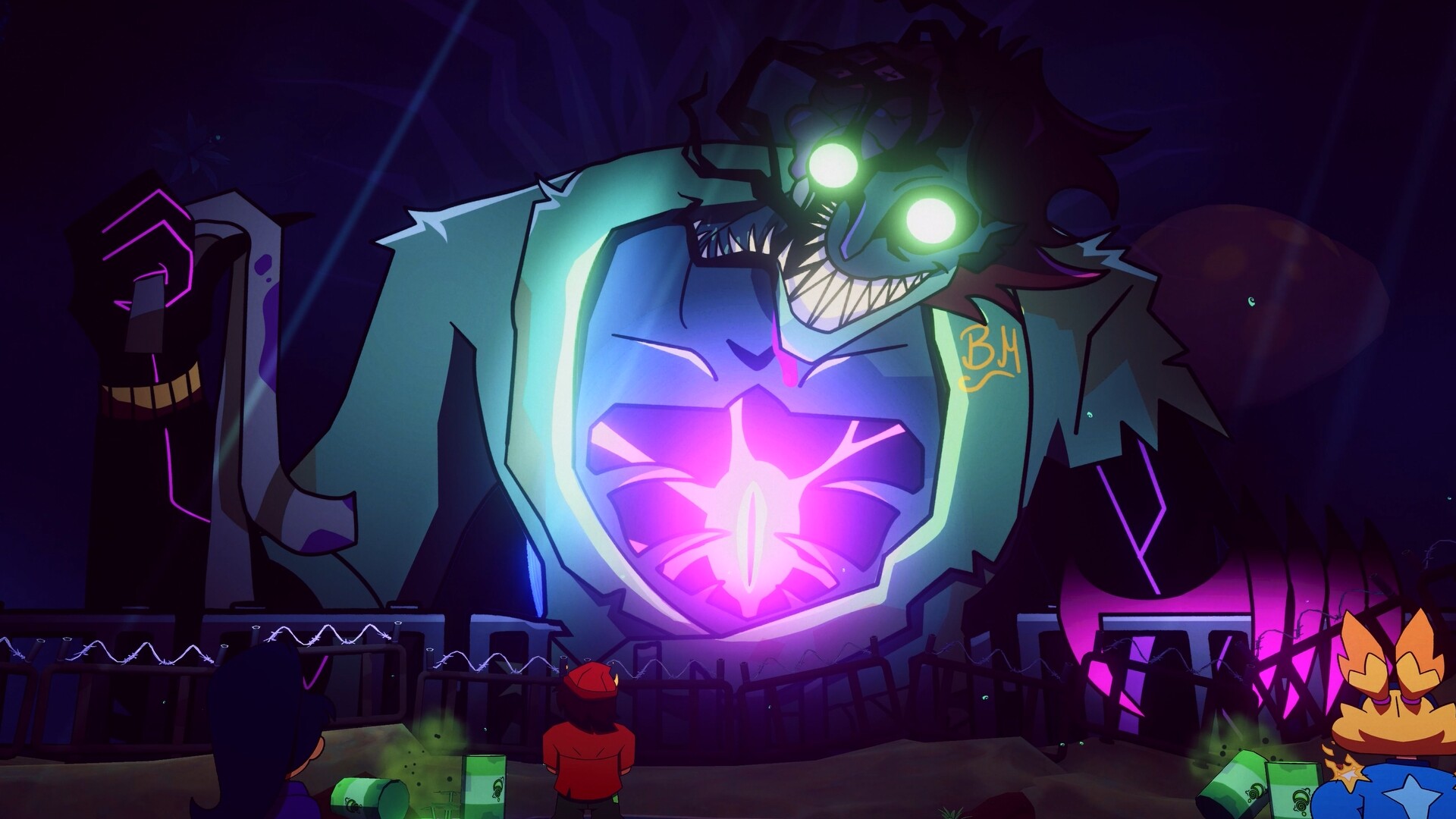
We first tried it with Fridge, the refrigerator that builds up its defenses and then uses them to smack you. That time, we had the pattern already decided and we brainstormed different monsters that used ice to match the design pattern. One wacky idea with ice indirectly led to a fridge. We just thought it was too funny, especially in how the rectangular shape held its eye in the sketches and how the name was so short. So we ran with it.

It also happens that the visual design influences the pattern used in the sequence. At one point, someone just said we should fight a mountain. That idea never left our heads until we created Peak haha. As much as possible, we try to work on the theming, visual design, and game design of monsters in parallel. The feedback loop helps us better define our monsters every few hours and the shared ideas help us explore cool new concepts.
RL: There are a lot of deckbuilders out there at the moment. What makes Dream Team Supreme stand out from the crowd?
OC: When we started working on Dream Team Supreme, there was only one co-op roguelike deckbuilder out on the market. We wanted to push the collaboration even further by placing both players in the same giant robot, planning their actions on the same sequence. Now that Slay the Spire 2 has brought co-op to most of the roguelike deckbuilder audience, we found that a ton of players had fun with it and want more. We’re happy to be one of the only games doing co-op deckbuilding.
We keep things accessible for fans of roguelike deckbuilders by featuring enough of the familiar to sink your teeth into, then adding crunchy new mechanics to figure out. Each turn, the beat sequence used to control your giant robot, Super Supreme, asks players to decide where to slot in which carts. We wanted Super Supreme and the invading monsters to feel heavy during battles so we created Momentum, which converts defence into offense and eliminates lost efforts. Every action contributes to growing the giant robot’s power level, raising the stakes as the battle rages on.
Thematically, Dream Team Supreme feels like taking your favourite action figure out for an adventure in the sun. The stakes are high, but the stress is low. It’s like playing a cartoon from your childhood. Adding to the lore, we add comics by Matthew J Wills, famous creator of Swords, throughout the game to add levity and personality to the tension.

RL: How do you go about balancing a game like this for both solo and co-op play?
OC: We want co-op players to talk. So we introduce many decision points where talking is to the players’ advantage. During encounters, players have to both press Lock In when they want to execute the Beat Sequence. Typically, that means being on the same page about the strategy. Otherwise, players make compromises for the greater good of the team and that feels great. By design, we offer choices that can be collaborative by addition, like each player choosing a card at the same time so they can talk about using them together. We also offer choices that create an imbalance, so that players must agree to lean their Giant Robot one way or another.
Solo players get to make all the decisions and keep all the control. We find that they tend to lean into risky behaviour more than co-op players. That’s part of the fun and we don’t do anything to change it. We only watch out for how much more information they need to keep in mind while making decisions. We know that situational awareness is a collaborative behaviour that fosters teamwork. In solo, there isn’t a friend to notice that the monster will steal your power, for example. So we test to make sure that the information isn’t so overwhelming that it creates analysis paralysis or slows the game down too much.
RL: What systems have you got in mind to keep the gameplay feeling fresh after multiple runs?
OC: No two runs are alike. Procedural generation changes monsters, rewards, and locations every time you press play. New discoveries unlock scientists, carts, and mods in curated batches, introducing new strategic possibilities without overwhelming players.
Difficulty levels and daily challenges significantly change run conditions, encouraging players to experiment with different strategies and deck combinations.
RL: We see you’re listed on Steam, but the theme seems a great fit for consoles, too. Is that in your mind or are you just focused on PC for now?
OC: Absolutely! We targeted Steam as our priority because that’s where roguelike deckbuilding players played their games when we decided to make Dream Team Supreme. That has changed a bit since, with more games coming to consoles and big hits piercing the mobile market.
When we’re letting people try Dream Team Supreme out at conventions, we get a lot of friends playing together and a lot of families playing together. The fun they were having made it obvious pretty early that Dream Team Supreme will be good for couch co-op and consoles. We’ve done a lot of work on the technical side of things and implemented controller support so that, after we complete the game for PC, porting onto consoles can come easily.

RL: And finally; when can players get their hands on Dream Team Supreme?
OC: The demo is up on Steam and we updated it last weekend to include auto-saving. The demo is free(!), so grab a pal and jump into a giant robot together. We haven’t decided on a release date for the full version yet and we will let you all know when we do.
Dream Team Supreme is available now as a demo, for free, on Steam. Until a release date is announced, we’ll keep scanning the horizon for big lizards fridges announcements…