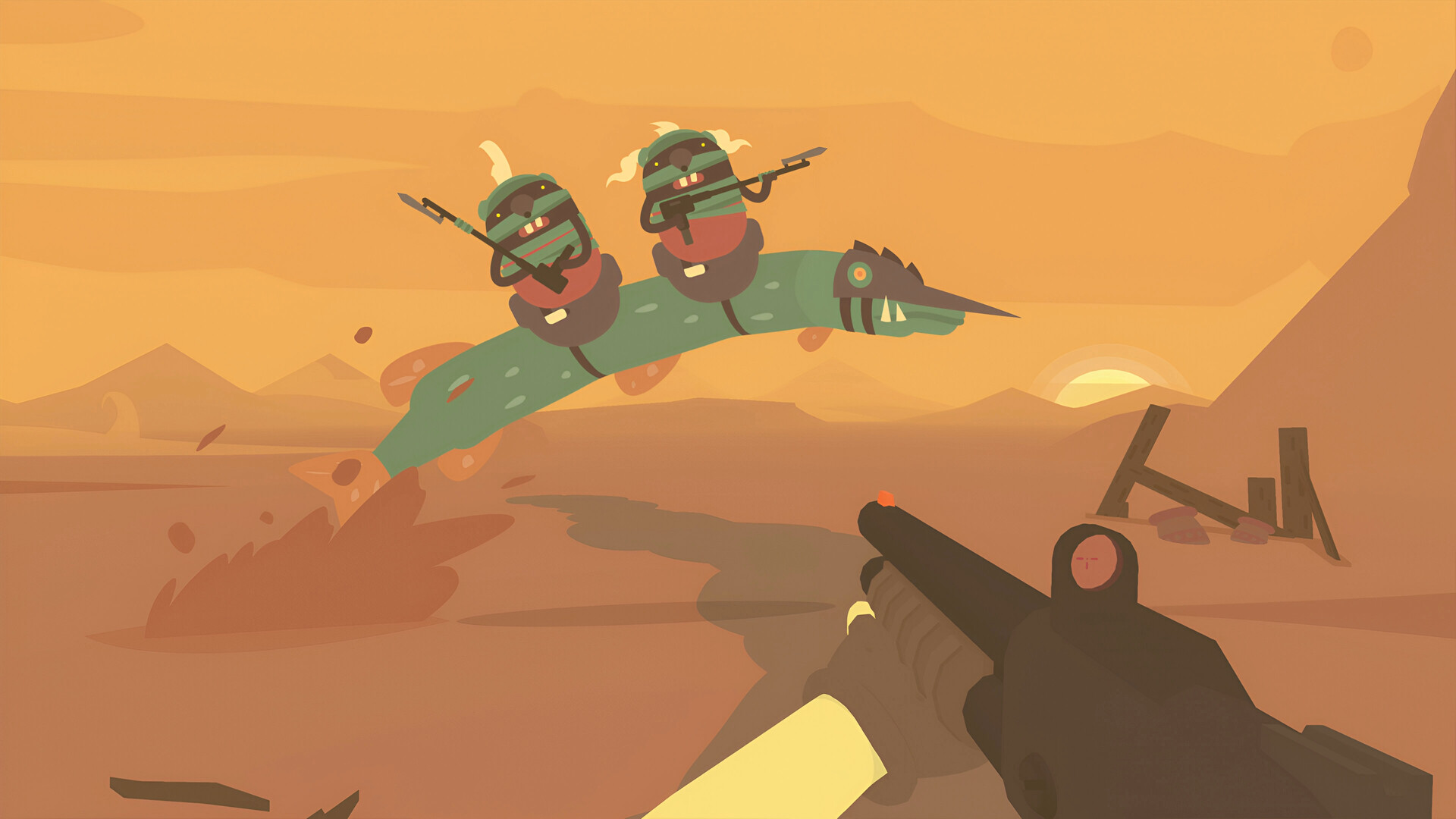
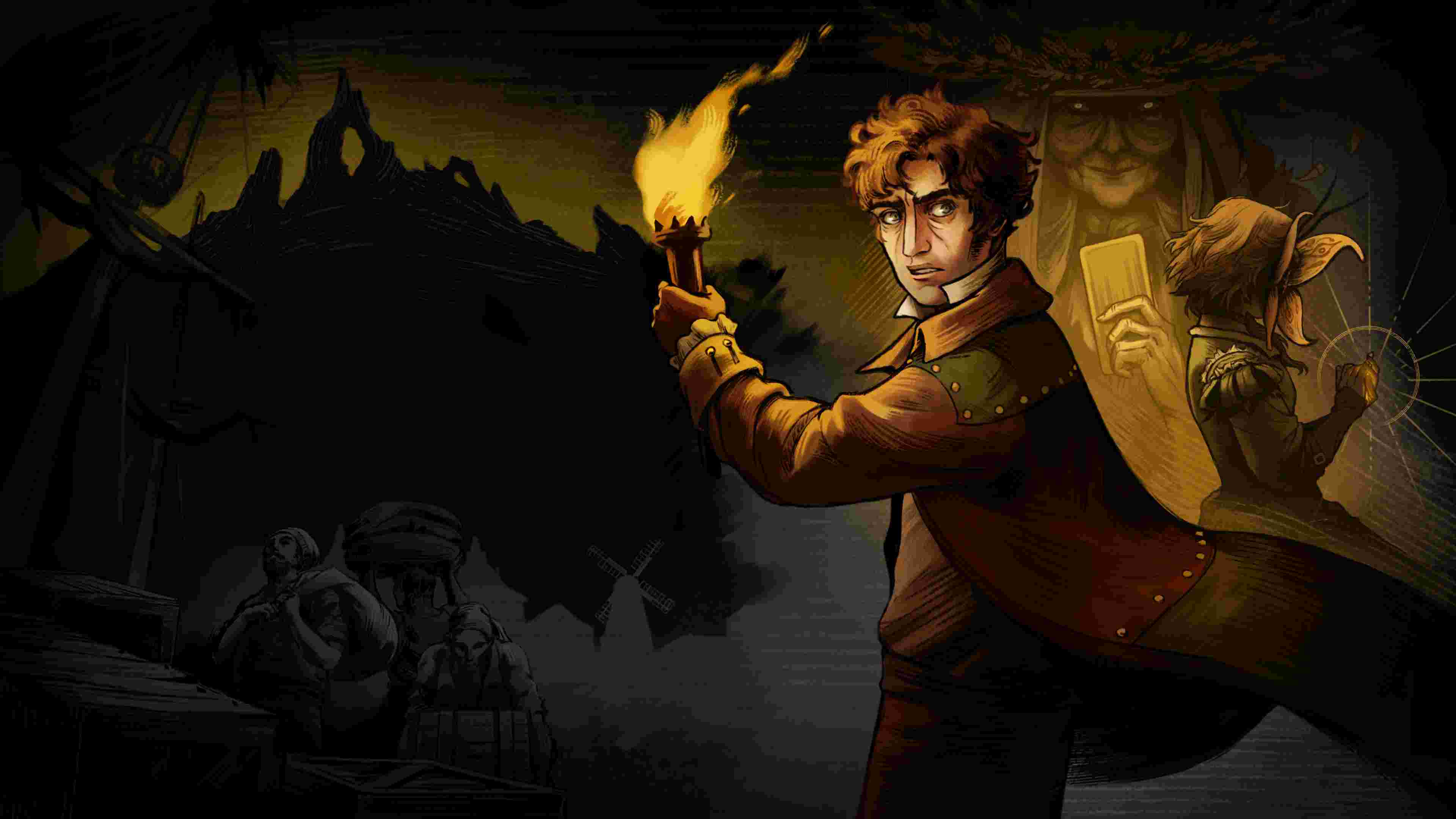
I’ve had my eye on Fogpiercer for some time now, ever since Hooded Horse signed the deckbuilder and I took a closer look at its premise. That premise has you driving trains through post-apocalyptic landscapes and battling Mad Max-inspired bandits. It’s cool, both figuratively and literally, as the post-apocalypse here is an icy wasteland full of death and danger. Also, Mad Max + Trains = Cool!
Fogpiercer certainly makes you work for it, and I’ve already died a whole bunch at the hands of those pesky bandits. This roguelike deckbuilder puts you up against impossible odds, at least at first, and you’ve got to push through and find a foothold as you begin the process of building out your early game options. In that sense, it really leans into its roguelite gameplay loop – you are expected to fail hard and often.
While Fogpiercer is a roguelike deckbuilder, it does things a little differently from most games of this kind. The main point of variance is the connection between the build of your train and the cards in your hand. As you extend your train with new carriages, new cards come into play and can be added to your deck during each run. I very much like this setup, where the perimeters of your deckbuilding shift with your train build, and vice versa.

There’s also a cool movement mechanic. It’s a bit like the excellent Shogun Showdown in the sense that you must position yourself carefully, but unlike that game, Fogpiercer has enemies that fan out across additional lanes. In other words, you’re not just worrying about what’s in front and behind you – danger can come from all around.
Another thing I really like about Fogpiercer is how close you feel to the action. Developer Mad Cookies Studio should be commended for creating a really nice atmosphere. You pull into a station, tend to your train before departing, and the whole thing has a lovely flow to it, as you bounce between interactions and encounters.
The action takes place along the way, with bandits swooping in once you set off to your next destination, whether that be an event or a shop further down the line. You can clearly see when you’ll be getting into a fight, and what rewards are up for grabs. Those rewards include scrap but also card upgrades and health boosts.

The combat system quickly scales in terms of complexity. There are different weapon types, and while some can be used more often, like the minigun, the mortars cost more action points but also move your enemies around the battlefield, allowing you the chance to line up cool attacks.
Shield management is just as important as attacking and positioning, and you can also use your train to ram opponents, which doesn’t happen often, but it is mighty satisfying when it does play out. In these moments, it feels like a clever puzzle more than a card game.
I’ve also been enjoying the unit interactions and how tactile the battlefield feels during combat. You can nudge cars and bikes into each other, take advantage of obstacles near the track, and use your weapons to find the weakest point in the enemy’s formation. Hitting the right unit can trigger a series of events, with collisions unfolding and your enemies accidentally taking each other out. Like Fights in Tight Spaces, there’s a distinctly cinematic feel to the combat.

With a few hours of game time under my belt already, I think the thing that I’m most impressed by is the strength of the connection between train assembly, deck building, and how that manifests within combat. It’s a smart little self-reinforcing loop where your theory crafting feeds directly into your tactical options in battle. Considering how there are four characters and their respective mechanics to work through, that’s a lot of potential options to experiment with.
Finally, the cel-shaded art style is more than good enough to clearly communicate everything you need to know, which is no mean feat given how complex the turn-based combat can be during crunch moments. In fact, I’d say that the whole thing has been presented rather well. The UI is clean and clear, both in and out of combat, and overall, I’m really pleased with how Fogpiercer has turned out. It looks good, it plays well, and it’s out now on PC (Linux, Mac, Win).