I’ve been championing the excellent-looking Wardrum for some time now, and you may have already spotted it in our latest monthly round-up.
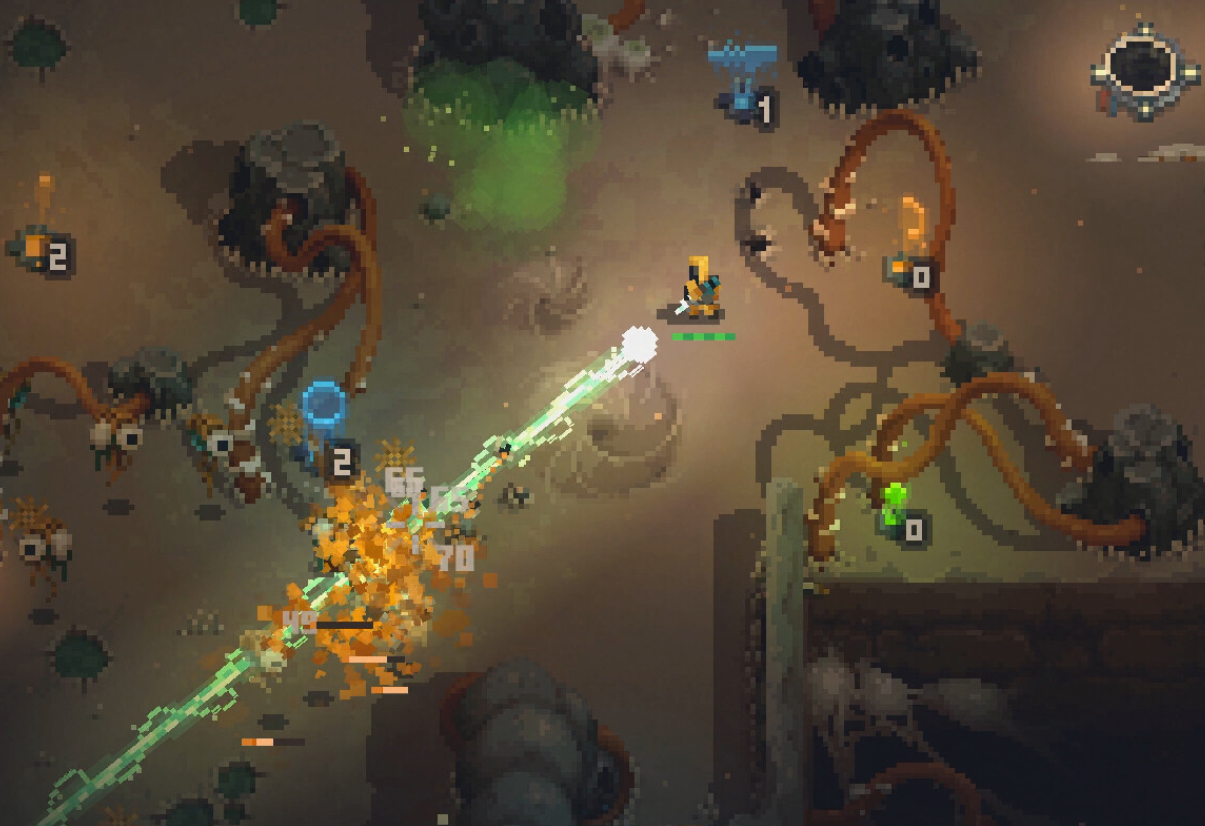
Sporting gorgeous HD-2D-inspired visuals, the game blends rhythm and roguelite elements, placing you in command of a tribal warband as you battle through tactical encounters against formidable foes.
Ahead of its launch this Thursday (May 7th), we caught up with Lead Designer Patrick Milvi to discuss the game’s visual inspirations, its unique rhythm-based combat, and what players can expect post-launch.
You can read our full interview below.

RL: For those who are unfamiliar, can you tell us what Wardrum is?
Pat: Wardrum is a tactical rhythm roguelite, where you command five tribal warriors in grid-based battles against various foes.
The game is set in a harsh fantasy land where rhythm magic is prevalent. Your warband has learned to use that magic by fighting in time to the beat of a war drum! With this squad, you must set out on a journey to confront and defeat an unknown threat that is poisoning the lands.
The unique twist is that Wardrum combines turn-based tactics and rhythm gameplay: each attack you execute has a different rhythm combination of keys that you must play in sync with the beat.
RL: How did the idea of combining turn-based tactics with rhythm mechanics first come about?
Pat: I really enjoy playing fantasy turn-based tactics games like Fire Emblem. The attack animations in those games are gorgeous, but after seeing them 100 times, I usually end up switching them off. This led me to think, how could I make it more engaging? I had seen a few turn-based games do the button pressing thing, but not in time with the music. So that’s when the idea started to form. I’m also a street dancer, so moving to the rhythm takes inspiration from that world also.
Once we tested the idea in game, it was instantly clear that it is fun and engaging! Some of the rhythm actions make you feel like you’re actually shooting a bow or hitting with a large war hammer. One playtester also noted that the rhythm phase gives more weight to the tactics as you have to first plan and then execute.
RL: The pixel artwork is a personal highlight for me. Were you inspired by HD-2D games or any other projects when developing the game’s visual style?
Pat: We definitely were! The Octopath Traveller series and Project Triangle Strategy were our main inspirations. In our earlier game, Fashion Police Squad, we used the same art style but with a little less emphasis on the effects and lighting. So, we wanted to push the art style further with Wardrum, which also played to our strengths.

RL: What inspired the game’s world and the concept of rhythm magic driving both combat and corruption?
Pat: I am a big fan of when the theme and mechanics make sense together, and I’m also a sucker for cool fantasy worldbuilding. So having a well themed game just makes sense to me and lets me immerse myself in the world much better.
The process started with the rhythm mechanic. So I started by asking questions. What’s the main source for rhythms? Drumming. Why does attacking to the rhythm give power? Magic. Where does that magic come from? From the core of the planet. How does it affect the World? Plants, animals, and elemental powers like fire also react/move to it. How do the humans view this power? They see it as Godly, it shows up in their dialogue, items, etc.
From there, you then build the world and mechanics side by side, adding to one and getting ideas for the other.
RL: What is the penalty for not timing your attacks to the beat, and what impact do debuffs have on your timing?
Pat: If you hit the beat well, you will do more damage and have a higher chance to crit. You will also increase buff and debuff percentages like damage done and how many turns they last.
If you miss the beat, you will still do reduced damage. Some attacks are more stable and have less of a penalty, while others require a better result to be most effective. Player attacks never miss completely, except in a few rare environmental cases.
For all of you who want to focus more on strategy, we also have an easy mode for the rhythm part of the game. It makes the rhythm timings easier and less punishing when you miss, so you can still experience it in a less punishing fashion.
As for the classic turn-based debuffs: For enemies, they work as you’d expect, but for the player they change the rhythm phase’s audio, visuals and mechanics. Here are a few examples from all 3 categories:
Bleed adds an extra input to the rhythm phase that deals full damage to self when you miss it, but none at all if you manage to press it perfectly to the beat.
Confused changes all the input keys randomly, making you scramble with a whole new set of keys.
Haste gives you move points for the tactics, but speeds up the music, making the rhythm phase faster & harder. This trade-off wasn’t planned, but felt like an interesting mechanic. Slow does the opposite of this.
Blinded removes the visual aid from the rhythm phase, so you have to rely more on hearing the beat, while Deaf muffles the music so that it’s hard to hear, and so on.
There are many other effects as well that I’ll leave for the players to discover.

RL: How are runs kept fresh beyond randomisation?
Pat: At the start of each run, the player can form a party of five from eight different classes, so there are a few combinations to try. During your run, you level up your units, and all classes have skill trees where you can mix and match abilities that suit your playstyle.
You’ll also find and choose trinkets that act as modifiers for units. Each unit can equip two trinkets to make them stronger or change their playstyle. There are some broken and fun combinations to be found.
We have six different maps, and you get to choose a few from four of them each run. Each biome comes with its own enemies, battlefields, events, and debuffs.
Maps feature events with interesting choices, and there’s also a way to craft your own rhythm abilities, where you combine attacks, heals, buffs, and other attributes with quirky rhythm patterns. E.g., one rhythm ability I created had a street fighter style button combo of left, down, right, A done to the beat that results in an X-shaped area of effect attack that inflicts bleed & poisoned for three turns and gives you 20 gold for each enemy hit.
RL: How are you feeling in the lead-up to launch, and what has the response been like from early players or demo feedback?
Pat: We are super excited for launch! We’re a small team of three (with some freelancer help) and have been working on Wardrum for close to three years now, so finally getting it out there feels amazing. The response from playtesters and demo players has been very positive, so we’re eager to see how the full game lands.
Hopefully, many players will give the game a chance!
RL: What can players expect from Wardrum post-launch?
Pat: The game launches in great shape with a lot of content to play. We’ll be paying close attention to the players’ feedback, balance and any huge bugs, and fixing anything that arises as soon as possible.
If the game does well financially, we will be able to support it post-launch with additional content, quality of life fixes, and polish.
RL: Thank you for taking the time to answer our questions! Now to save you scrolling back up for the link, head this way for the Steam page for Wardrum.