You wait for what feels like an age for a decent game about trains to turn up, and then two arrive at once… Figures.
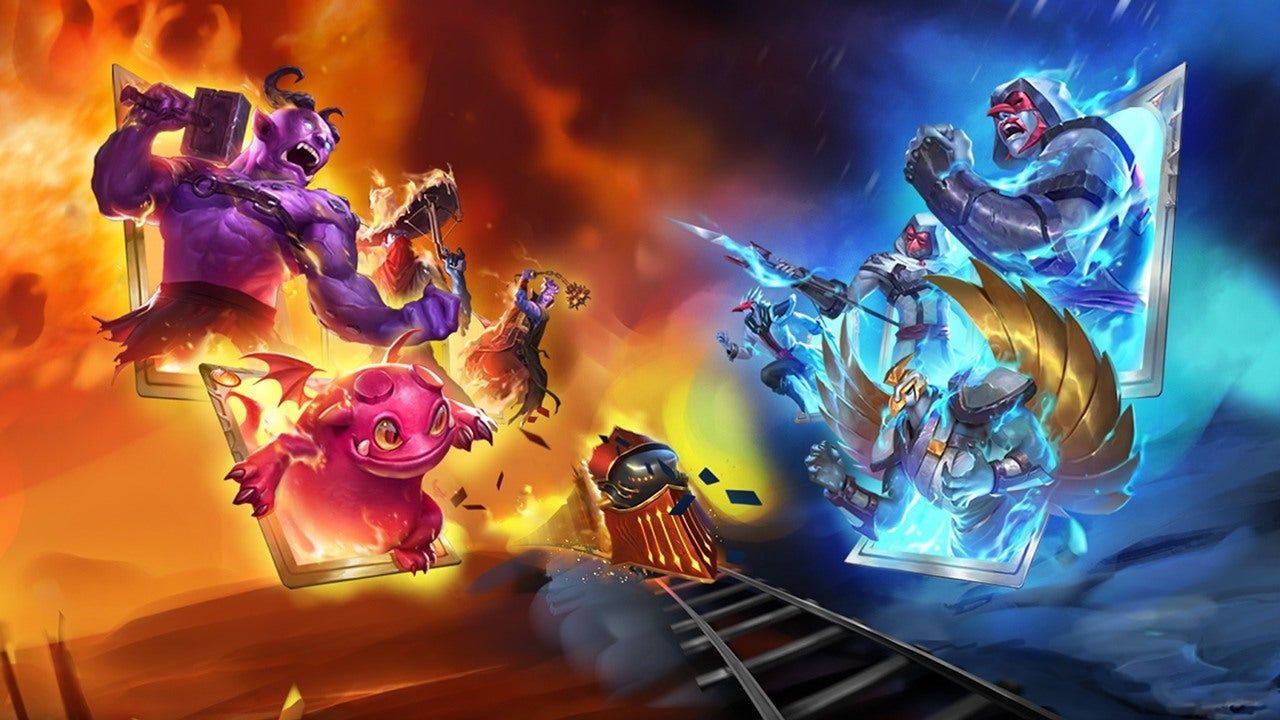
I bloody loved Monster Train 2, which recently arrived on multiple platforms all at the same time, and it did so in fine fettle, too. Elsewhere, there was also Apocalypse Express, which featured alongside Battle Train in the most recent edition of Gone Rogue. What I’m saying is: if you like trains and roguelikes, these are halcyon days.
What is Battle Train?
Developed by Terrible Posture Games and Nerd Ninjas, and then published by Bandai Namco, Battle Train is a polished roguelike deckbuilder with puzzle elements presented against the backdrop of a gameshow all about trains that do battle. But you know that already.

The presentation in Battle Train is top notch, and I mentioned the game’s publisher and developers up top because this is clearly the work of a capable team who have had enough time to cook. The game opens with crisp cinematics and the visuals are nicely polished and characterful, which nicely supplements the gameshow theme.
At the core of the experience are the battles that take place between contestants on the gameshow – as controlled by you – and the in-house AI-enemies that are out to stomp on you. This is done via a skirmish between two sets of trains, which you must direct at your enemy and smash into their base until they run out of HP. Or you do.
Ticket to Ride
Much like the beloved board game, Ticket to Ride, Battle Train is all about stitching together a railway and connecting objectives. Unlike the tabletop game, however, here your pieces come in different shapes and sizes, all depicted on playing cards. On top that, you can use additional cards to trigger different buffs, such as making your train deal more damage for a set number of rounds, or delayed explosions, as shown in the screenshot below.

Battle Train is turn-based, so you have a bit of time to arrange your pieces on the board. In fact, it is vitally important that you do take your time and make sure you’ve got your piece of track facing in the right direction before laying it, because there is no taking backsies if you balls up. Which I did. Frequently enough that I’m taking the time to mention it now.
Your train pieces must be linked together as best you can, to hit any objectives on the board and give yourself more action points to do further things. Once you’ve played your cards and used up your actions, then you must hand the initiative back to your opponent, who can lay their own tracks and damage yours.
Throughout, you have access to your own cards, however, these are supplemented by a shared deck. Between you and your opponent, you spend turn after turn arranging tracks, linking up attacks, and doing as much damage as you can. At times it can feel a bit attritional, as you battle for the best track, but overcoming those challenges is always satisfying.
You can improve your train over time, with stat-buffing upgrades and trinkets that open up new tactical options. This simple roguelite progression loop of upgrades is fairly basic but it helps you slowly build up a head of steam – which I’m sure is a train reference, right? Bad jokes aside, I didn’t really understand the decision to artificially slow player progress either via the narrative loop adopted here, but that was obviously the pacing that the developers were looking for…?

Planning Your Journey
It doesn’t take long before the arenas are busy and you’ve got multiple objectives to consider. Not only that, but your enemy gets more efficient at smashing your base and blowing up your network, setting back your best laid plans and forcing you to change track.
After a while my head started to hurt and some of the puzzle boards began to feel too busy. However, I can see that this is the sort of experience that would be best enjoyed by someone who likes to think several steps ahead – something I personally struggle with, especially in abstract games that I’m still learning.
While at first I enjoyed the light-hearted gameshow framing, I felt like Battle Train could have matched that energy with a bit more chaos, to boost run variety and keep players on edge. Having noted that, I don’t want to end this on a downer, because this feels like a minor fault in an otherwise impressive deckbuilder that looks and play rather nicely, even if it doesn’t always line-up perfectly.
Platform & Timetable Info
Battle Train arrived on June 17th on both PC (Win) and Nintendo Switch. I played the game on PC (mostly on the ol’ Steam Deck) via access kindly provided by the game’s publisher. Thanks!