When Demon’s Mirror was first pitched to me I was immediately on board. The idea of fusing roguelike deckbuilding and match-3 puzzle mechanics sounded like such a good idea on paper that I was eager to see how it played out in reality.
The studio behind this unholy union of gameplay styles is Be-Rad Entertainment, with Good Shepherd Entertainment helping them spread the word in their capacity as publisher. Armed with this information, I embarked on a card-playing adventure through a fantasy forest filled with strange creatures that were pretty much all out to get me.
What can be seen in the Demon’s Mirror demo?
As alluded to up-top, Demon’s Mirror is a roguelike deckbuilder set in a fantasy universe. As you’ve likely done many times before, the aim of the game is to play your cards as effectively as possible as you look to whittle down your enemies’ health bars.

The all-important twist here is that there is a 6×6 grid on the right side of the screen. Using tile-matching mechanics that you’ve no doubt seen before in the likes of Bejeweled and Puzzle Quest, you can use this grid to do additional damage to your enemies as you look to vanquish them from the battlefield.
This dual approach to combat creates an interesting and engaging gameplay dynamic where you’re looking to create synergies in one hand and then back them up with damage dealt from the other. That said, you can do more with the grid than just deal damage, and it quickly became clear to me that simply focusing on the cards would lead to disaster.
Mirror, mirror on the forest floor
The game has a fairly traditional approach to progressing through the forest. Via an overworld map, you must plot your way through a series of encounters until you reach the boss battle. Along the way you’ll take part in several skirmishes, but there are also story-based encounters to discover, too. Nothing too revolutionary there.

Things get really interesting when it’s time to engage in combat. Your cards allow you to either deal damage or inflict influence on your opponents. This damage can be supplemented with an attack from your grid, which gets stronger the more tiles you link together. You can also use the grid for other purposes, for example to bolster your shield ahead of an incoming attack.
There is a limit to the number of actions you can take per turn, so the aim of the game is to make the best use of the tools at your disposal. Cards in your hand can affect the board and vice versa, and so combat became much more tactical than I was expecting, especially as the enemy health bars started to get more substantial.
Cards on the table time
The fusion of deckbuilding and tile-matching tactics creates a really unique experience, and I’m interested in seeing how this mash-up of genres can be extended over the course of a full game. I think the in-game currency and various item pick-ups will determine how different each run is going to feel, and there are two more starting characters that aren’t included in the demo, which will change things further.

The first biome, which represents the core of the demo, does a good job of introducing the central concept, although I think a better tutorial would have helped me get to grips with everything sooner.
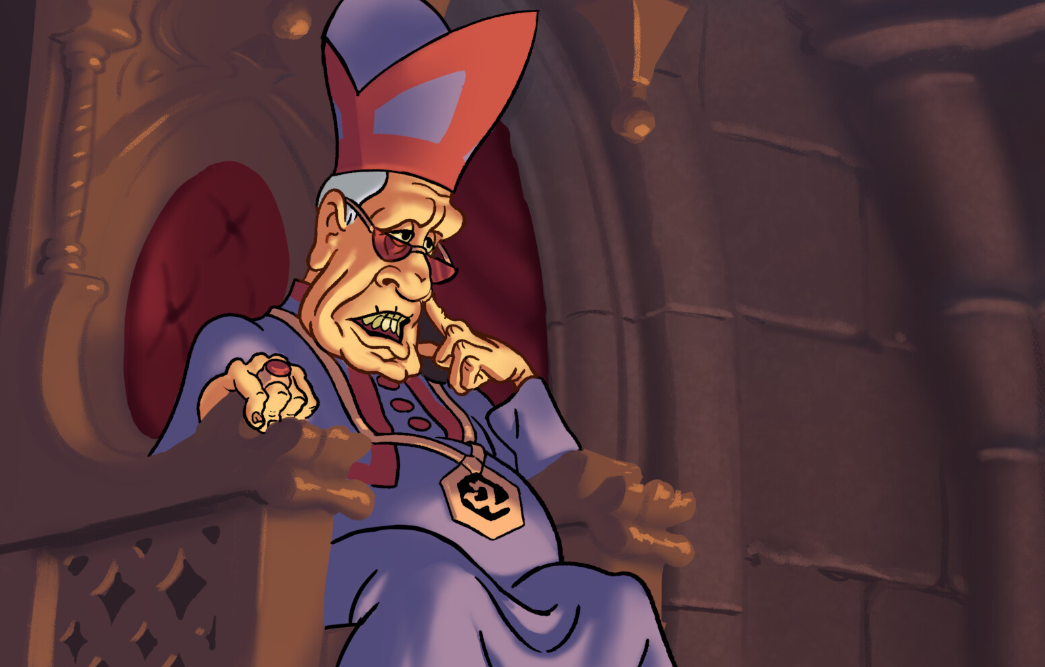
I did enjoy the game’s artistic direction. There’s a touch of Monty Python-inspired whimsy to its design that I really liked, although it’s not a parody of the fantasy genre; rather, it’s more playful and breezy, albeit with a demonic twist. The soundtrack is pretty good, too.
All told, I was glad to have played through the demo and I look forward to returning to the game when it’s finished. According to the trailer (attached below for your viewing pleasure), that’s going to be some time this summer. Wishlist it over on Steam.